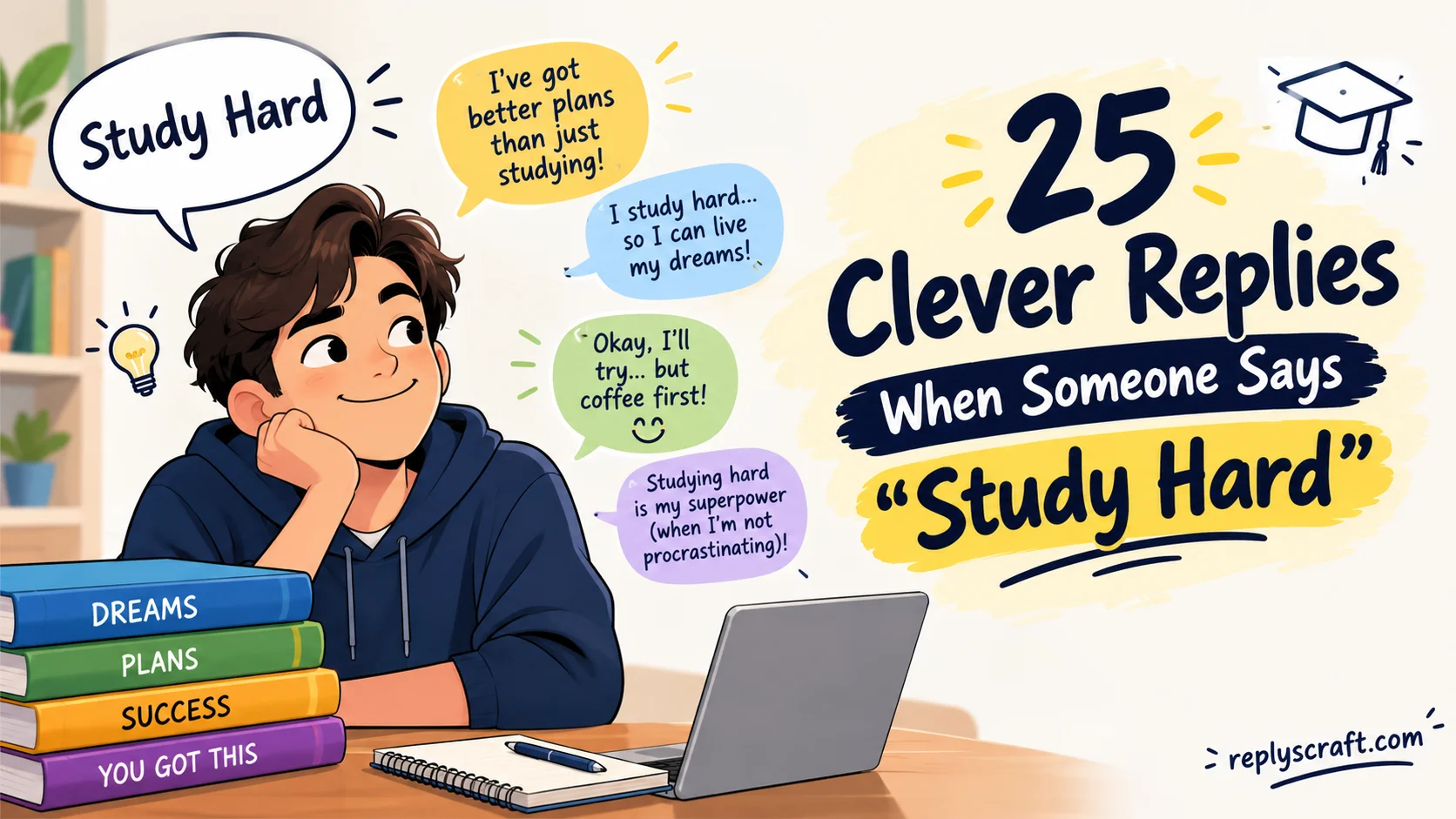

When someone tells you to study hard, the right response can be polite, funny, confident, or playful. These Replies When Someone Says “Study Hard” will help you respond naturally, show appreciation, and keep the conversation going without sounding awkward or repetitive.
Whether a friend, classmate, teacher, family member, or crush says “Study hard,” your reply can match the situation. You might say “I’ll do my best,” make a funny comeback, or send a sweet response that shows you appreciate their encouragement and support.
In this guide, you’ll discover natural replies, witty comebacks, short text responses, and friendly answers for different conversations. Whether you want to sound respectful, humorous, motivated, or a little flirty, these examples will help you choose the right words. Find an easy response that fits your personality and makes every conversation feel more natural.
1. Funny Comebacks to “Study Hard”
When a friend tells you to study hard, a funny response can turn an ordinary conversation into a playful exchange. This approach works particularly well when you’re both students and understand the pressure of assignments, exams, and revision. Instead of sounding annoyed, use a little humor to show that you appreciate the reminder without taking it too seriously. Choose a joke that fits your usual sense of humor, especially if the other person is genuinely trying to encourage you.
Meaning
You acknowledge the advice while adding a humorous twist.
Tone
Funny, casual, and friendly.
Example
Friend: Study hard, bro. Exams are coming!
You: I’m trying. Even my books are tired of seeing me.
Best Use
Use this comeback with friends, classmates, or siblings who enjoy lighthearted jokes about studying.
2. Clever Comebacks That Sound Smart
A clever comeback is ideal when you want to respond with confidence and a little wit. Rather than making fun of the person, turn their advice into a smart observation about learning, effort, or success. These replies work best when delivered naturally, without trying to prove that you’re the funniest person in the room. A short, thoughtful line can make your response memorable while keeping the conversation positive.
Meaning
You respond intelligently while showing that you understand the value of studying.
Tone
Witty, confident, and thoughtful.
Example
Classmate: Study hard!
You: Definitely. Success doesn’t download itself.
Best Use
Use this response with classmates, friends, or anyone who appreciates a smart joke.
3. Sarcastic Replies for Close Friends
If your friends constantly remind you to study, a little sarcasm can be entertaining. The key is to make the joke about your situation rather than insulting the person giving advice. Sarcasm is easier to understand face-to-face because your expression communicates the humor. Over text, the same words can sound serious, so consider adding an emoji or choosing a softer line if you’re unsure how the message will be received.
Meaning
You playfully exaggerate your reaction to the advice.
Tone
Sarcastic, playful, and slightly dramatic.
Example
Friend: You better study hard this time.
You: Thanks for the breaking news. I had absolutely no idea.
Best Use
Use it with close friends who understand your humor. Avoid it with teachers or someone offering sincere encouragement.
4. Short and Cool Replies
Sometimes, the best comeback is only a few words long. If someone says “study hard” while you’re leaving class or ending a chat, you don’t need to invent an elaborate joke. A quick, confident response acknowledges their message and keeps the conversation moving. These replies are especially useful when you want to sound relaxed rather than overly excited or defensive.
Meaning
You accept the reminder without making a big deal out of it.
Tone
Casual, confident, and straightforward.
Example
Friend: Study hard!
You: Always in progress.
Best Use
Use short replies in everyday conversations, quick messages, and group chats.
5. Polite Responses to Show Appreciation
Not every reminder needs a joke. Sometimes a person tells you to study hard because they care about your future or want you to do well in an exam. A warm, polite answer shows that you appreciate their concern. This is a particularly good choice when responding to parents, older relatives, teachers, mentors, or anyone whose encouragement you genuinely value.
Meaning
You acknowledge the person’s good intentions and thank them for their support.
Tone
Respectful, warm, and appreciative.
Example
Aunt: Study hard, dear. I want you to do well.
You: Thank you! I’ll do my best.
Best Use
Use this response with family members, teachers, elders, or anyone offering sincere encouragement.
6. Playful Comebacks About Exams
Exam season gives you plenty of material for playful replies. You can joke about revision, question papers, or the pressure of remembering everything you’ve learned. The trick is to keep the humor relatable instead of making studying sound completely pointless. A light joke can help you and your friends relax without suggesting that you aren’t taking your responsibilities seriously.
Meaning
You use exam-related humor to acknowledge the pressure of studying.
Tone
Playful, relatable, and funny.
Example
Classmate: Study hard. The final exam won’t be easy.
You: My plan is to make the exam nervous about me.
Best Use
Use this comeback with classmates who are comfortable joking about exams.
7. Confident Responses That Show Determination
When someone encourages you to study hard, you can respond in a way that reflects your motivation. You don’t need to boast about your grades or promise a perfect result. A confident answer simply communicates that you’re prepared to put in the effort. These replies are useful when you’re setting goals, preparing for important exams, or trying to reassure someone who believes in your abilities.
Meaning
You show that you’re taking your studies seriously and intend to work consistently.
Tone
Confident, determined, and positive.
Example
Friend: Study hard. You’ve got this!
You: I will. I’m focused on giving it my best.
Best Use
Use this response with supportive friends, family members, classmates, or mentors.
8. Replies That Make Your Friends Laugh
Some conversations call for a more exaggerated joke, especially when your friends know how much you struggle to leave your phone alone while studying. A funny response can turn that familiar problem into a shared laugh. Keep the joke light and avoid making it sound like you’re asking for permission to neglect your responsibilities. The goal is to be entertaining, not dismissive.
Meaning
You make a relatable joke about distractions or student life.
Tone
Funny, casual, and self-aware.
Example
Friend: Put your phone away and study hard.
You: I would, but my phone and I are working through some separation issues.
Best Use
Use it with close friends who understand your study habits and enjoy jokes about everyday distractions.
9. Witty Replies About Getting Good Grades
When someone connects studying with good grades, you can answer with a witty line that shows ambition without sounding arrogant. These responses work well when a friend is motivating you before a test or asking whether you’re prepared. A little humor keeps the conversation relaxed while still recognizing that preparation matters.
Meaning
You respond to academic expectations with a clever remark about results.
Tone
Witty, optimistic, and self-assured.
Example
Friend: Study hard and get those grades!
You: That’s the plan. I’m trying to give my report card a glow-up.
Best Use
Use this response with classmates and friends discussing marks, results, or exam preparation.
10. Responses When Someone Keeps Reminding You
Repeated reminders can become frustrating, even when the person means well. If someone tells you to study hard every time they see you, you can acknowledge their concern while gently pointing out that you’ve heard them. A humorous answer may work with a friend, while a calm and direct reply is better when you want the reminders to stop.
Meaning
You recognize the advice but communicate that you don’t need to hear it repeatedly.
Tone
Playful, direct, or mildly sarcastic, depending on your wording.
Example
Sibling: Study hard! I’m telling you again.
You: Don’t worry, your reminder has officially been added to my mental calendar.
Best Use
Use it with siblings or friends who repeat the same advice. If the reminders genuinely bother you, explain that politely instead of relying on sarcasm.
11. Flirty Responses to “Study Hard”
If someone you like tells you to study hard, you can turn their encouragement into a lighthearted, flirty exchange. The best replies show interest without making the conversation awkward or distracting from the original message. Start with something playful and see how the other person responds. Keep the flirting appropriate to your relationship and avoid assuming that a friendly reminder automatically means romantic interest.
Meaning
You acknowledge the encouragement while adding a subtle hint of attraction.
Tone
Flirty, sweet, and playful.
Example
Crush: Study hard, okay? I want you to do well.
You: I will, but a little encouragement from you might help even more.
Best Use
Use this reply when you already share a friendly or flirtatious connection and the other person seems comfortable with that tone.
12. Sweet Replies to Someone Who Cares About You
A reminder to study can be a small expression of affection. If a partner, close friend, or family member is looking out for you, a sweet reply can make them feel appreciated. You don’t need to be overly sentimental; a simple acknowledgment is often enough. Focus on the care behind the message rather than turning every reminder into a joke.
Meaning
You recognize the person’s support and respond with warmth.
Tone
Sweet, caring, and appreciative.
Example
Partner: Study hard, okay? I believe in you.
You: Thank you for always cheering me on. It means a lot.
Best Use
Use it with a partner, close friend, or family member who regularly encourages you.
13. Replies to “Study Hard” From Your Parents
Parents often remind their children to study because they want them to have good opportunities. Even if you’ve heard the advice many times, responding respectfully can prevent a simple reminder from becoming an argument. You can reassure them that you’re making an effort without promising results you cannot guarantee. If you’re struggling with your workload, this can also be a chance to explain what support would help.
Meaning
You reassure your parents that you’re aware of your responsibilities.
Tone
Respectful, reassuring, and sincere.
Example
Mom: Make sure you study hard for your exams.
You: I will, Mom. I’ve made a study schedule, and I’m following it.
Best Use
Use this response with parents or guardians, especially when they want reassurance that you’re preparing responsibly.
14. Professional Responses to a Teacher or Mentor
When a teacher, tutor, or mentor tells you to study hard, a respectful answer is usually the safest choice. Humor can be appropriate if you know the person well, but a professional or academic setting calls for clarity and courtesy. A simple acknowledgment demonstrates that you’ve listened and understand the importance of preparation. You can also mention a specific step you’re taking if you want to show initiative.
Meaning
You acknowledge the guidance and show that you’re willing to make an effort.
Tone
Polite, mature, and professional.
Example
Teacher: Make sure you study hard before the assessment.
You: Thank you for the reminder. I’ll review the material carefully.
Best Use
Use this reply with teachers, tutors, academic advisers, or mentors.
15. Funny Replies About Being Lazy
If you’re joking with friends about procrastination, a self-deprecating comeback can make the moment more entertaining. The best version pokes fun at your habits without turning laziness into something to be proud of. This style is especially effective when the other person knows you’re capable of working hard but occasionally need a little motivation.
Meaning
You admit to procrastinating in a humorous way.
Tone
Self-deprecating, casual, and funny.
Example
Friend: You need to study hard today.
You: My motivation is ready. It just hasn’t arrived yet.
Best Use
Use this with friends who understand your sense of humor. If you are genuinely falling behind, pair the joke with a realistic plan to get started.
16. Comebacks for Someone Who Is Teasing You
Sometimes “study hard” isn’t encouragement at all. A classmate may say it sarcastically because they think you’re unprepared or because they enjoy teasing you. You can answer confidently without turning the exchange into an argument. A clever response works best when it keeps your dignity intact and avoids attacking the other person’s intelligence or ability.
Meaning
You respond to teasing without appearing rattled or becoming unnecessarily hostile.
Tone
Confident, witty, and slightly challenging.
Example
Classmate: Study hard this time. You might actually pass.
You: Thanks for the prediction. I’ll let the results speak for themselves.
Best Use
Use it when someone is being mildly provocative. If the teasing becomes persistent or cruel, a direct boundary may be more effective than another comeback.
17. Motivational Responses That Keep You Focused
Not every reply needs to entertain the other person. Sometimes the most useful response reinforces your own determination. When someone tells you to study hard before an important test, scholarship exam, or assignment deadline, answer in a way that reminds you of your goal. This can turn an ordinary comment into a small moment of accountability.
Meaning
You accept the encouragement and reaffirm your commitment to making progress.
Tone
Motivated, positive, and focused.
Example
Friend: Study hard. Your future self will thank you.
You: Exactly. Every focused hour is a step toward my goals.
Best Use
Use this response with supportive friends, study partners, or anyone helping you stay motivated.
18. Clever Text Messages to Send Back
Text messages often need a different approach from face-to-face conversations. Without facial expressions or vocal tone, elaborate sarcasm can be misunderstood. A short, friendly line is usually easier to interpret and doesn’t require the other person to figure out whether you’re joking. If you’re replying to a classmate or friend on WhatsApp, Instagram, or another messaging app, choose wording that sounds like something you’d actually type.
Meaning
You acknowledge the message in a natural, text-friendly way.
Tone
Casual, clever, and conversational.
Example
Friend: Study hard 📚
You: Books open, brain loading. 😄
Best Use
Use it in private chats, class group messages, or casual social media conversations.
19. Responses That Show You Appreciate Their Advice
Some people offer advice because they have experienced the pressure of studying themselves. If the reminder comes from someone you respect, you can recognize their intention without making the conversation overly formal. A thoughtful response is particularly useful when the person has helped you before or genuinely wants you to succeed.
Meaning
You show that you value the reminder and recognize the person’s support.
Tone
Grateful, sincere, and respectful.
Example
Older cousin: Study hard now. It’ll help you later.
You: You’re right. Thanks for looking out for me.
Best Use
Use this response with older siblings, relatives, mentors, or friends who regularly offer constructive advice.
20. Playful Comebacks About Your Books
Books, notes, and endless revision are familiar parts of student life, making them easy subjects for a joke. A book-related comeback is especially useful when you’re already sitting with your study materials and someone comments on how much work you have left. Keep the joke light enough that it doesn’t sound like you’re complaining about the person who reminded you.
Meaning
You use your study materials as the punchline.
Tone
Creative, playful, and humorous.
Example
Friend: Study hard and finish those chapters.
You: I’m negotiating with chapter five. It refuses to cooperate.
Best Use
Use it with classmates, study partners, or friends who know what you’re currently revising.
21. Sarcastic Replies About Academic Pressure
When everyone around you seems focused on grades and exams, another reminder to study can feel like adding pressure to an already busy day. If you’re speaking with a friend who understands your frustration, a mild sarcastic remark can acknowledge that feeling. However, avoid using sarcasm with someone who is sincerely trying to help or when you need to discuss genuine academic stress.
Meaning
You make a dry joke about the pressure surrounding your studies.
Tone
Dry, sarcastic, and slightly dramatic.
Example
Friend: Study hard. Your future depends on it!
You: No pressure at all. Just my entire future sitting on this desk.
Best Use
Use it with close friends who understand your humor. Choose a sincere response if the conversation is about real worries or expectations.
22. Respectful Replies When You Disagree
You might not appreciate being told how to study, especially if you already have a routine that works for you. Instead of responding defensively, acknowledge the advice and explain your position calmly. This approach helps you maintain your independence without dismissing the other person’s intentions. It is particularly helpful when someone assumes you’re not working hard simply because your approach looks different from theirs.
Meaning
You acknowledge the advice while calmly expressing confidence in your own approach.
Tone
Respectful, assertive, and composed.
Example
Friend: You should study harder. You’re not doing enough.
You: I appreciate your concern, but I’ve got a plan that works for me.
Best Use
Use it when a friend or relative questions your study habits and you want to communicate a clear boundary without starting an argument.
23. Replies When Someone Says It Before an Exam
The days leading up to an exam can be stressful, so the best response depends on whether you feel prepared or nervous. If you’re confident, a playful line can keep things light. If you’re anxious, it’s perfectly fine to thank the person for their encouragement instead. There’s no need to pretend that you have everything under control when you’re genuinely worried about the test.
Meaning
You respond to last-minute encouragement in a way that reflects your actual mood.
Tone
Reassuring, hopeful, or humorously confident.
Example
Classmate: Good luck tomorrow. Study hard tonight!
You: Thanks! One final revision session, then I’m trusting my preparation.
Best Use
Use this response with classmates or friends before quizzes, finals, entrance tests, or other important assessments.
24. Comebacks for Group Chats
In a group chat, a reply can become part of a larger conversation, so it helps to choose something funny without singling anyone out. If a classmate posts “study hard, everyone,” you can respond with a joke that other students will recognize. Avoid overly personal sarcasm because people in a group may interpret it differently from a close friend in a private conversation.
Meaning
You acknowledge the group reminder with a relatable comment that invites a lighthearted reaction.
Tone
Social, humorous, and friendly.
Example
Classmate in the group chat: Everyone, study hard! Exams are near.
You: Group study plan: 10% studying, 90% asking what chapter we’re on. 😂
Best Use
Use it in class groups, study communities, or chats with friends who share the same academic schedule.
25. Simple Comebacks When You Don’t Want to Joke
A clever comeback doesn’t always have to be funny. Sometimes, the most natural response is a straightforward acknowledgment, especially when you’re tired, busy, or not in the mood for banter. A calm answer can communicate maturity and appreciation without forcing a joke. It also works when you aren’t sure whether the other person is being playful or serious.
Meaning
You respond directly and politely without adding humor or unnecessary explanation.
Tone
Calm, mature, and sincere.
Example
Friend: Make sure you study hard this week.
You: I will. Thanks for the encouragement.
Best Use
Use it in uncertain social situations, casual conversations, or whenever a simple acknowledgment feels more natural than a comeback.
How to Choose the Right Comeback
The best response depends less on the exact words “study hard” and more on the relationship you have with the person saying them. Before replying, consider these simple guidelines:
- If they’re encouraging you: Thank them or give a confident response.
- If they’re joking with you: Match their playful energy with a funny comeback.
- If they’re teasing you: Stay composed and use a witty answer that doesn’t become insulting.
- If they’re a teacher or elder: Choose a respectful, sincere reply.
- If you’re texting: Keep it short and make sure sarcasm won’t be misunderstood.
- If the reminders bother you: Set a polite boundary instead of hiding your frustration behind a joke.
- If you like the person: Use a subtle flirty reply only when that kind of conversation feels welcome.
Quick tip: Say your chosen response aloud before using it. If it sounds unnatural or harsher than you intended, simplify it.
FAQs:
What is the best comeback when someone says “study hard”?
A clever option is, “I’m on it. Success doesn’t download itself.” It sounds confident and playful without being disrespectful. If the person is sincerely encouraging you, a simple “Thanks, I’ll do my best” may be more appropriate.
What is a funny reply to “study hard”?
You could say, “I’m trying. Even my books are tired of seeing me.” This works well with friends and classmates who enjoy jokes about exams and revision.
How do I respond when my crush tells me to study hard?
Try a light, friendly response such as, “I will, but a little encouragement from you might help even more.” Use it only if flirting already feels comfortable between you.
How should I reply when a teacher says “study hard”?
A respectful response is best: “Thank you for the reminder. I’ll review the material carefully.” It acknowledges the teacher’s advice and shows that you’re taking your studies seriously.
What should I say if someone keeps telling me to study hard?
If you want to keep things light, say, “Don’t worry, your reminder has been added to my mental calendar.” If the reminders are frustrating, explain calmly that you’re already managing your study schedule.
Is it rude to reply sarcastically to “study hard”?
Not necessarily. Sarcasm can be funny among close friends who understand your personality, but it may sound disrespectful to a teacher, parent, or someone offering sincere support. When you’re unsure, choose a polite or neutral response.
Conclusion:
Replies When Someone Says “Study Hard” can help you respond naturally in different conversations. Whether you prefer a polite, funny, friendly, or flirty reply, choosing the right words makes it easier to express yourself and keep conversations comfortable.
Choose your response based on the person, situation, and your relationship with them. You can show appreciation, confidence, humor, or motivation with a simple sentence. Explore these examples, pick your favorite reply, and make your everyday conversations more natural, positive, and engaging.



