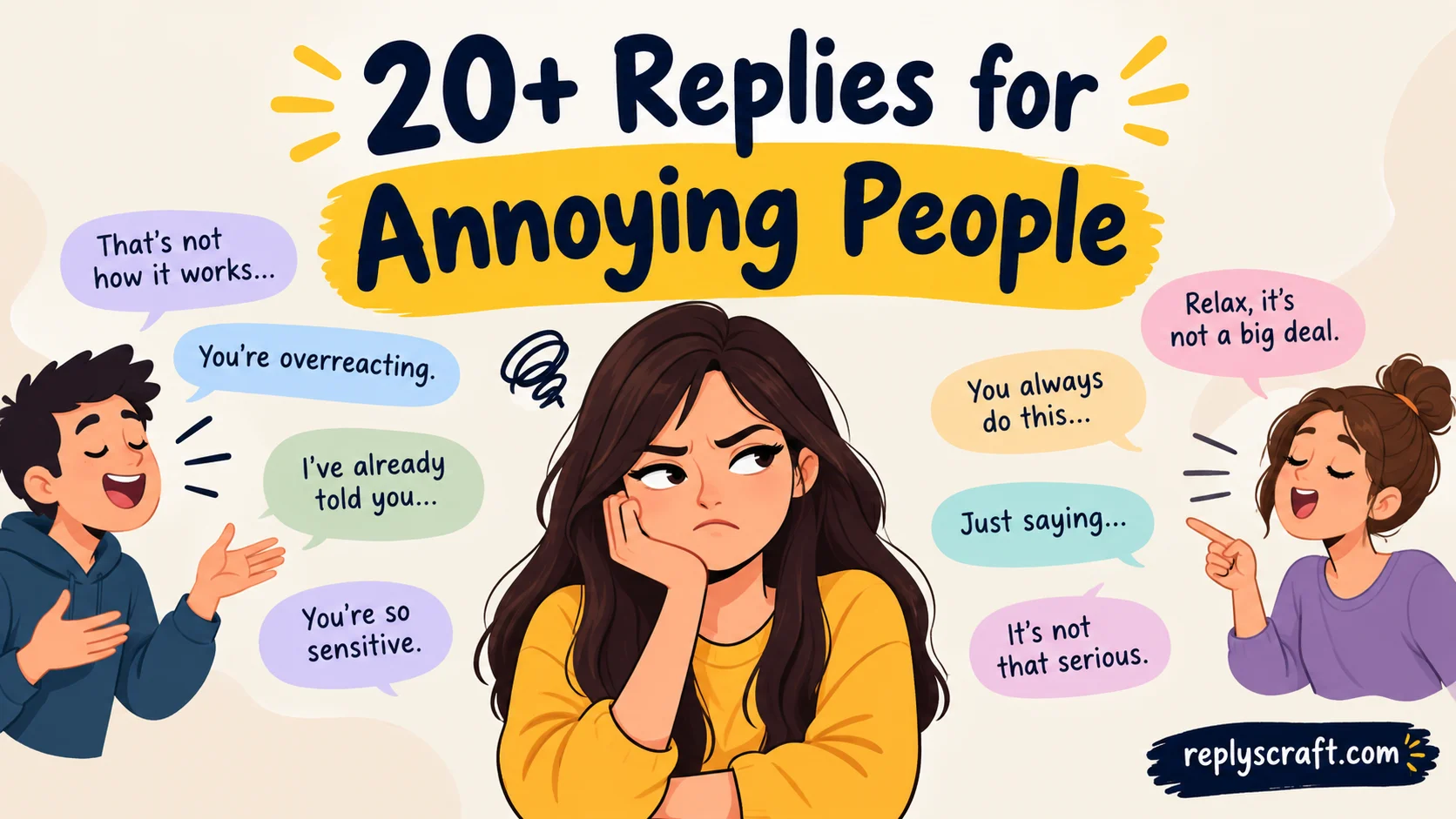

Replies for Annoying People can make difficult moments easier when someone talks too much, interrupts, or gives unwanted advice. A clever comeback can bring a quick laugh, protect your patience, and help you handle annoying behavior without creating unnecessary conflict.
When someone keeps interrupting, teasing, or repeating the same question, staying calm can make your response more effective. A short, funny, and confident reply can stop the annoyance without sounding mean. The right timing and tone also help you stay respectful while making your point clearly and naturally.
Sometimes, the best response is sarcastic, while other situations need a polite answer or firm boundary. Good replies should not be cruel or insulting. Using humor, confidence, and self-control can help end an irritating conversation before it turns into a bigger argument or unnecessary frustration.
Funny Replies for Someone Who Keeps Annoying You
When a friend is deliberately getting on your nerves, humor can be more effective than anger. A playful comeback lets them know you’ve noticed without making the situation unnecessarily serious.
Meaning
This response jokingly suggests that the person is putting a lot of effort into being annoying.
Tone
Funny, playful, and lightly sarcastic.
Example
Friend: I’m going to keep bothering you until you answer me.
You: Wow, you’re really committed to this annoying-person career.
Best Use
Use it with friends or people who understand your sense of humor. Avoid it when someone is already angry.
Clever Responses to Annoying Questions
Some people ask questions simply because they want a reaction. Instead of giving them a long explanation, a clever answer can show that you aren’t interested in playing along.
Meaning
It points out the unnecessary nature of the question without becoming openly hostile.
Tone
Clever, confident, and slightly sarcastic.
Example
Person: Why do you always do things your own way?
You: Because following unnecessary instructions sounds exhausting.
Best Use
Good for casual conversations where a little sarcasm is acceptable.
Short Replies for Annoying People
Sometimes the strongest response is the shortest one. If someone keeps trying to start a conversation you don’t want, there’s no need to write a paragraph explaining yourself.
Meaning
It communicates that you’re not interested in continuing the interaction.
Tone
Direct and confident.
Example
Person: Come on, keep arguing with me.
You: I’m good, thanks.
Best Use
Especially useful for texting, social media, or situations where you want to end the conversation without drama.
Polite Responses When Someone Is Getting on Your Nerves
Not every annoying person deserves a sarcastic comeback. If you want to preserve the relationship, a polite boundary is often the smarter choice.
Meaning
You’re clearly asking the person to stop without insulting them.
Tone
Polite, calm, and respectful.
Example
Person: I’ve asked you the same question five times.
You: I understand, but repeating it won’t change my answer.
Best Use
Use with coworkers, relatives, acquaintances, or anyone you don’t want to offend.
Quick tip: Being polite doesn’t mean you have to tolerate behavior that repeatedly bothers you.
Sarcastic Replies for People Who Won’t Stop Talking
When someone keeps talking over everyone or refuses to notice that the conversation has ended, a little sarcasm can make the point quickly.
Meaning
You’re jokingly acknowledging how much the person is talking.
Tone
Sarcastic and humorous.
Example
Person: And then I told him another story, and after that—
You: I see we’re getting the director’s cut today.
Best Use
Best among friends or in relaxed social settings. It may sound disrespectful in a formal workplace.
Confident Replies When Someone Is Being Disrespectful
If the person isn’t merely annoying but is actually disrespectful, your response should focus on your boundary rather than trying to insult them back.
Meaning
It tells the person that their behavior is not acceptable to you.
Tone
Confident, direct, and controlled.
Example
Person: I’m going to keep making comments about you.
You: You can have your opinion. You don’t have to disrespect me with it.
Best Use
Useful when someone crosses a personal boundary or repeatedly speaks to you disrespectfully.
Funny Replies to an Annoying Friend
Close friends often tease each other, so a humorous comeback can keep the interaction entertaining rather than turning it into an argument.
Meaning
You’re teasing your friend back instead of taking their behavior seriously.
Tone
Friendly, funny, and playful.
Example
Friend: You missed me, didn’t you?
You: I noticed the peace and quiet disappeared.
Best Use
Great for texting, group chats, and playful conversations with close friends.
Replies for Someone Who Keeps Repeating the Same Thing
Repetition can become irritating quickly, especially when you’ve already answered the question or heard the joke several times.
Meaning
It humorously points out that you’ve heard the same thing enough times.
Tone
Dry, witty, and slightly sarcastic.
Example
Person: Did you hear what happened?
You: Yes. The sequel has already started.
Best Use
Works well when someone keeps repeating a story, joke, question, or complaint.
Clever Replies When Someone Wants a Reaction
Some annoying behavior is designed specifically to make you angry. Giving the person the reaction they want may only encourage them.
Meaning
You’re showing that you recognize what they’re trying to do and aren’t going to participate.
Tone
Calm, clever, and confident.
Example
Person: I know that will make you angry.
You: Then you’re going to be disappointed.
Best Use
Excellent when someone is deliberately provoking you.
Better choice: Keep your voice calm. The comeback works because you’re refusing to give them the reaction they expected.
Also Read This: 25 Witty Replies for “Are You Happy?”
Replies for Someone Who Interrupts You
Being interrupted repeatedly can be frustrating. Instead of competing for attention, a concise response can remind the person to let you finish.
Meaning
You’re asking for basic conversational respect.
Tone
Firm but reasonable.
Example
Person: Wait, wait, let me say something.
You: Give me ten seconds to finish, then the floor is yours.
Best Use
Suitable for friends, family, group discussions, and even relatively informal work conversations.
Funny Text Responses to an Annoying Person
Texting makes sarcasm tricky because the other person can’t hear your voice. A light, obviously playful response is usually safer than something that could sound genuinely angry.
Meaning
It humorously signals that the person’s messages are becoming excessive.
Tone
Funny and casual.
Example
Person: Hello? Hello? Hello? Why aren’t you replying?
You: Sorry, my phone needed a moment to recover.
Best Use
Ideal for texting and messaging apps with friends.
Calm Replies for Someone Who Is Trying to Start an Argument
You don’t have to answer every challenge with another challenge. Sometimes the most effective comeback is one that refuses to enter the argument.
Meaning
You’re making it clear that you don’t want unnecessary conflict.
Tone
Calm, mature, and confident.
Example
Person: You really want to argue about this?
You: Not really. I said what I needed to say.
Best Use
Useful with acquaintances, relatives, coworkers, or anyone who keeps trying to provoke an argument.
Savage-Style Replies Without Personal Insults
A “savage” comeback doesn’t have to attack someone’s appearance, intelligence, or personal life. A sharp observation can be enough.
Meaning
It turns the situation around without relying on a cruel personal insult.
Tone
Sharp, witty, and confident.
Example
Person: Nobody asked for your opinion.
You: Yet somehow you noticed it immediately.
Best Use
Works best in casual verbal exchanges where the conversation already has a teasing or competitive tone.
Responses for Someone Who Thinks They’re Always Right
Arguing with someone who refuses to consider another perspective can waste a lot of energy. A clever response can end the debate without trying to prove them wrong.
Meaning
It separates confidence from being willing to listen.
Tone
Dry, clever, and slightly sarcastic.
Example
Person: I’m always right.
You: That’s certainly one way to make disagreements convenient.
Best Use
Good for playful conversations and debates between people who know each other well.
Replies for a Person Who Keeps Giving Unwanted Advice
Unsolicited advice can become frustrating, particularly when you’ve already made your decision.
Meaning
You’re politely reminding the person that you can make your own choices.
Tone
Respectful, firm, and confident.
Example
Person: You should really do it my way.
You: I appreciate the suggestion. I’ll decide what works for me.
Best Use
Useful with relatives, friends, coworkers, and acquaintances.
Watch the tone: If the person genuinely means well, don’t turn a helpful suggestion into a personal conflict.
Professional Responses to an Annoying Coworker
Workplace situations require more care. A sarcastic comeback that might be hilarious with a friend can create unnecessary problems at work.
Meaning
It establishes a professional boundary without attacking the other person.
Tone
Professional, calm, and assertive.
Example
Coworker: I’ve already told you how you should do this.
You: Thanks. I’ll follow the process we’ve agreed on.
Best Use
Use at work when you want to remain professional while making it clear that you don’t need repeated instructions.
Responses When Someone Keeps Criticizing You
Constant criticism can become exhausting, particularly when it isn’t constructive. A good response separates useful feedback from unnecessary negativity.
Meaning
You’re willing to listen to useful criticism but won’t engage with endless negativity.
Tone
Mature, confident, and direct.
Example
Person: You always do everything wrong.
You: If you have specific feedback, I’m willing to hear it. General criticism isn’t helpful.
Best Use
Appropriate for work, family, friendships, and serious conversations.
Playful Replies for Someone Who Teases You Too Much
Teasing can be fun until one person takes it too far. A playful comeback can return the energy without escalating the situation.
Meaning
You’re showing that you can handle the joke while giving some teasing back.
Tone
Playful, confident, and humorous.
Example
Friend: I’m just better than you.
You: Congratulations. I’ll try to survive the pressure.
Best Use
Best for close friends and lighthearted conversations.
Replies for Someone Who Won’t Take a Hint
Sometimes you’ve already changed the subject, stopped responding, or made your lack of interest obvious, but the person keeps going.
Meaning
You’re clearly asking them to stop pushing the conversation.
Tone
Direct but not unnecessarily rude.
Example
Person: Come on, just keep talking to me.
You: I think I’ve given you my answer. Let’s leave it there.
Best Use
Useful in texting, casual conversations, and situations where someone ignores subtle signals.
Witty Responses to Someone Who Says “You’re So Quiet”
Being quiet isn’t necessarily something that needs to be explained. If someone keeps pointing it out, a witty answer can shut down the observation.
Meaning
It turns their comment into a light joke while showing that you’re comfortable being quiet.
Tone
Witty, calm, and self-assured.
Example
Person: Why are you so quiet today?
You: I’m giving everyone else a chance to be interesting.
Best Use
Works with friends, acquaintances, and casual social situations.
How to Choose the Right Comeback for an Annoying Person
The best comeback isn’t always the funniest or harshest one. The right choice depends on why the person is annoying you, how close you are, and what you want to happen next.
Meaning
This approach helps you respond intentionally instead of reacting emotionally.
Tone
Practical, calm, and thoughtful.
Example
Friend: Why didn’t you laugh at my joke?
You: Maybe because I’m saving my best laugh for something actually funny.
Best Use
Choose your response based on the relationship:
- Close friend: Try humor or playful sarcasm.
- Acquaintance: Keep it light and relatively polite.
- Coworker: Stay professional and avoid personal insults.
- Someone disrespectful: Use a firm boundary.
- Someone provoking you: A calm, short response often works better than an argument.
- Someone genuinely upset: Skip the comeback and respond with empathy.
Remember: A clever comeback should help you control the conversation, not create a bigger problem.
How to Respond to Annoying People Without Being Rude
There are times when the smartest response isn’t a comeback at all. If the person is simply irritating rather than intentionally disrespectful, a calm sentence can end the interaction without damaging the relationship.
Meaning
You’re choosing self-control over unnecessary conflict.
Tone
Mature, respectful, and confident.
Example
Person: I’m going to keep asking until you change your mind.
You: You don’t have to agree with me, but you do need to respect my answer.
Best Use
Best when you want the behavior to stop while keeping the relationship civil.
FAQs:
What is a good reply for an annoying person?
A good reply should be short, calm, and clever. Choose words that address the behavior without being unnecessarily rude, insulting, or hurtful.
How can I respond without sounding mean?
Use a lighthearted tone and simple humor. Staying confident and respectful can help you make your point without creating a bigger argument.
What should I say when someone keeps interrupting me?
You can politely say that you would like to finish speaking first. A calm response can set a clear boundary without making the situation uncomfortable.
Are sarcastic replies good for annoying people?
Sarcastic replies can work when the situation is friendly and the tone is understood. Avoid harsh sarcasm when it could hurt feelings or create unnecessary conflict.
How can I stay calm around annoying people?
Take a moment before responding, control your tone, and avoid reacting emotionally. Using patience, self-control, and thoughtful words can make difficult conversations easier.
Conclusion:
Using Replies for Annoying People can make frustrating conversations easier by encouraging calm, clever, and confident responses. The right words can help manage irritating behavior without unnecessary conflict.
Remember to match your response to the situation. A funny comeback, polite answer, or firm boundary can work well when delivered with confidence, humor, and self-control. Staying respectful helps prevent small annoyances from becoming bigger arguments while keeping conversations manageable and natural.




1 thought on “20+ Replies for Annoying People”