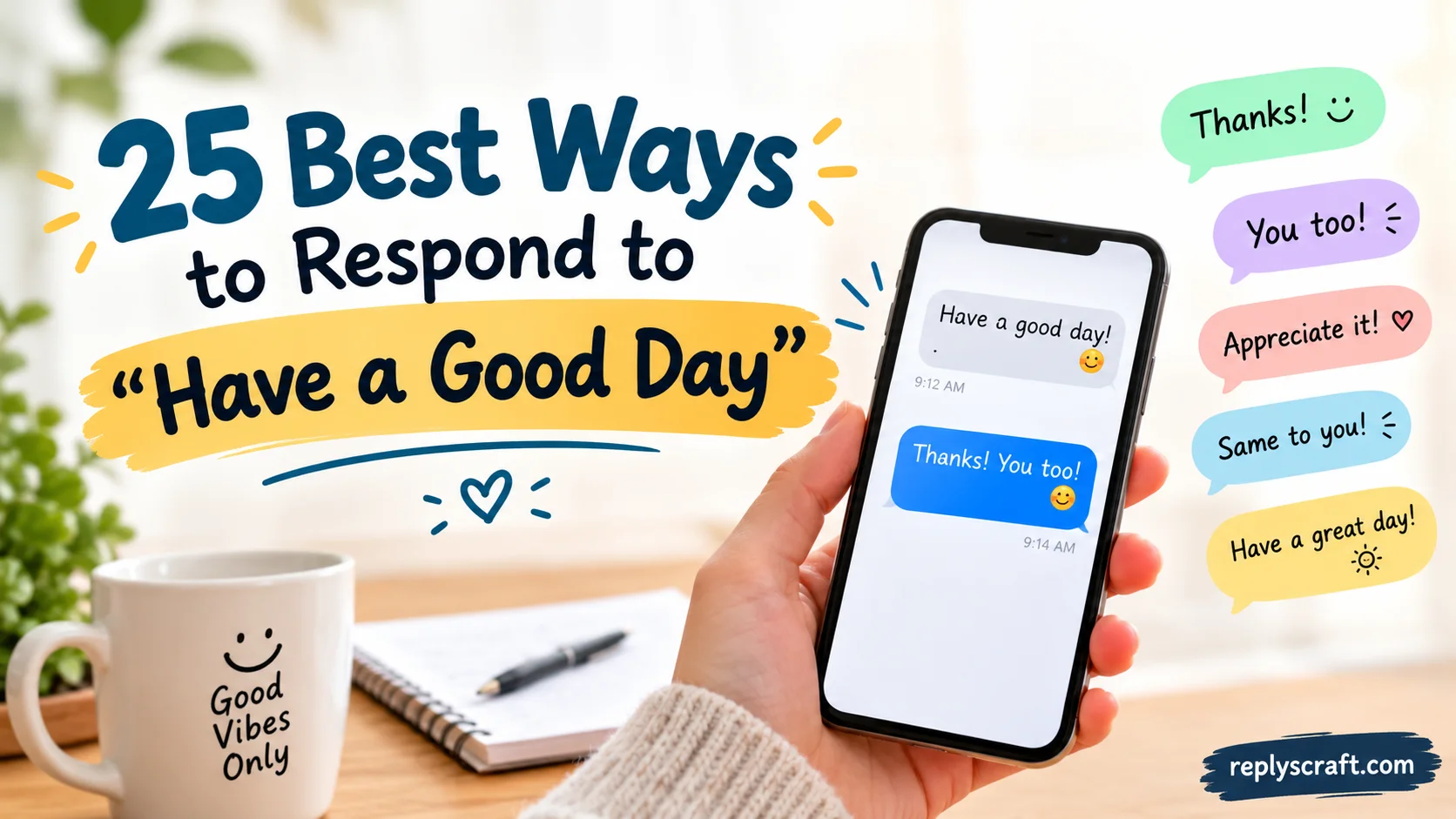

Knowing how to respond to Have a Good Day can help you keep conversations friendly, polite, and natural. Whether someone says it in person, at work, or through a text, the right reply shows kindness and makes a positive impression.
There are many simple and thoughtful replies you can use when someone wishes you a good day. You might say “You too!”, “Thanks, you as well!” or “Hope you have a wonderful day!” These friendly responses work well with friends, family, coworkers, and even strangers. Choosing the right words depends on your relationship and the situation.
If you want to sound more funny, sweet, professional, or playful, you have plenty of options. A warm response can make someone smile, while a professional reply helps maintain good manners at work. In this guide, you will discover natural replies, polite responses, and creative comeback ideas to help you answer confidently in everyday conversations and text messages.
1. Simple and Natural Responses
Sometimes, the best reply is the easiest one. When someone wishes you a good day, they are usually being polite or friendly rather than expecting a long conversation. A short answer acknowledges their kindness without making the exchange unnecessarily complicated. These responses work well with acquaintances, classmates, coworkers, friends, and people you meet during everyday activities.
Meaning
You appreciate their good wishes and return the same positive energy.
Tone
Friendly, polite, and casual.
Example
Coworker: Have a good day!
You: Thanks, you too!
Best Use
Use this response in almost any everyday situation, especially when you are leaving a conversation or do not have time for a longer exchange.
2. “Thank You, You Too!”
This is a slightly warmer version of the standard reply. It acknowledges the person’s kindness before returning their wishes. The phrase feels natural because it is polite without being overly formal, making it useful for both personal and professional interactions.
Meaning
You appreciate the person’s thoughtfulness and hope their day goes well too.
Tone
Courteous, warm, and straightforward.
Example
Neighbor: Have a good day! See you later.
You: Thank you, you too! Take care.
Best Use
Choose this response when speaking with neighbors, colleagues, teachers, customers, or anyone you want to treat with everyday courtesy.
3. “Thanks! Hope Your Day Is Amazing Too.”
If you want to sound more enthusiastic than simply saying “You too,” this reply adds a little extra positivity. It shows that you are returning the kindness rather than just repeating the other person’s words. It is especially suitable when someone has been helpful or made your morning brighter.
Meaning
You genuinely wish the other person a positive and enjoyable day.
Tone
Cheerful, thoughtful, and upbeat.
Example
Friend: Have a good day! Hope everything goes well.
You: Thanks! Hope your day is amazing too.
Best Use
Use it with friends, supportive coworkers, family members, or anyone who has made an effort to brighten your day.
4. Funny Responses to Make Them Laugh
A little humor can turn an ordinary goodbye into a memorable moment, particularly when you are talking to someone who enjoys jokes. The key is to keep the humor light and relevant. A playful response works best when you already have a comfortable relationship with the person. Avoid sarcastic jokes with strangers or in situations where a professional tone matters.
Meaning
You accept the good wishes while adding a humorous twist.
Tone
Funny, playful, and relaxed.
Example
Friend: Have a good day!
You: I will try, but my bed is already asking me to come back.
Best Use
Save this response for close friends, siblings, or coworkers who appreciate casual humor. It may feel out of place in a formal business conversation.
5. “I’ll Try My Best!”
This response adds a touch of humor without needing an elaborate joke. It suggests that having a good day is a mission you intend to accomplish. Depending on your delivery, it can sound lighthearted, determined, or gently self-deprecating.
Meaning
You playfully acknowledge their wishes and show that you are ready to face the day.
Tone
Casual, witty, and optimistic.
Example
Classmate: Have a good day at college!
You: I’ll try my best! Let’s see what the timetable has planned for me.
Best Use
Use it with friends or classmates when you want to keep the conversation relaxed and relatable.
6. “Thanks! No Meetings, No Problems, Just Peace.”
This is a humorous choice for someone who understands your daily struggles, especially if you work in a busy office. It expresses your ideal version of a good day while giving the other person something to smile about.
Meaning
You jokingly describe the peaceful day you hope to have.
Tone
Witty, playful, and slightly sarcastic.
Example
Coworker: Have a good day!
You: Thanks! No meetings, no problems, just peace. That is the dream.
Best Use
This reply works well with coworkers and friends who share your sense of humor. Avoid it if the other person is your manager and the comment could be interpreted as criticism of the workplace.
7. Sweet Responses for Someone You Love
When your partner or someone special says “Have a good day,” you may want to respond with affection rather than a routine goodbye. A sweet message can make the person feel appreciated and remind them that you care. It does not need to be dramatic; a few sincere words can feel more meaningful than an elaborate romantic statement.
Meaning
You return their kindness while expressing affection.
Tone
Sweet, loving, and caring.
Example
Partner: Have a good day, love. Don’t forget to eat lunch.
You: Thank you, sweetheart. You have already made my morning better.
Best Use
Use this reply with your partner or someone with whom you already share romantic affection. If the relationship is new, keep the wording consistent with your level of closeness.
8. Flirty Replies for Your Crush
If your crush wishes you a good day, you can use the moment to show a little interest without making the exchange too serious. A flirty response should feel natural and leave room for the other person to respond comfortably. Start with something playful rather than an intense romantic declaration, particularly if you are still getting to know each other.
Meaning
You appreciate their message and gently signal that you enjoy their attention.
Tone
Flirty, charming, and playful.
Example
Crush: Have a good day! 😊
You: It is already off to a good start now that I have heard from you.
Best Use
This response suits texting or casual conversations with someone you like, especially when they have already shown some interest in you. If they keep the conversation strictly friendly, avoid pushing the flirtation.
9. “You Too, But Make It Unforgettable!”
This reply turns a standard farewell into an energetic little exchange. It encourages both of you to make the most of the day without sounding overly serious. The wording is particularly effective when you are talking to an enthusiastic friend or someone who enjoys motivational banter.
Meaning
You return their wishes while encouraging a fun, memorable day.
Tone
Upbeat, confident, and playful.
Example
Friend: Have a good day!
You: You too, but make it unforgettable!
Best Use
Use this with friends, teammates, or people who appreciate energetic conversation. It may sound a little too theatrical for a brief interaction with a stranger.
10. Professional Responses at Work
Workplace conversations often call for a response that is courteous, concise, and appropriate to the relationship. When a manager, client, colleague, or customer wishes you a good day, there is usually no need for a joke or personal comment. A polished response communicates appreciation while helping the conversation end smoothly.
Meaning
You acknowledge the person’s courtesy and maintain a professional relationship.
Tone
Respectful, composed, and professional.
Example
Manager: Have a good day. I will see you at tomorrow’s meeting.
You: Thank you. I hope you have a productive day as well.
Best Use
Choose this response for workplace emails, office conversations, business calls, or interactions with clients. In a more relaxed workplace, “Thanks, you too!” is equally appropriate.
11. Short Text Replies
When someone sends “Have a good day” by text, a long response is rarely necessary. Short replies are useful when you are busy, on your way somewhere, or simply exchanging quick messages. The best short answer still sounds warm rather than dismissive, so choose wording that matches the friendliness of the original message.
Meaning
You acknowledge the message without extending the conversation.
Tone
Casual, friendly, and concise.
Example
Friend: Have a good day at work!
You: Thanks! You too 😊
Best Use
Use short responses on WhatsApp, Instagram, SMS, or other messaging apps when the conversation is casual and there is no need to continue chatting.
12. “Thanks for the Good Vibes!”
This reply recognizes the positive energy behind the message. It sounds more personal than a routine thank-you and works especially well when the person regularly encourages you or sends thoughtful messages.
Meaning
You appreciate not only the wish itself but also the positive feeling behind it.
Tone
Warm, cheerful, and appreciative.
Example
Friend: Have a good day! You have got this.
You: Thanks for the good vibes! I really appreciate the encouragement.
Best Use
Choose this response for supportive friends, encouraging teammates, or anyone who helps you feel more confident about the day ahead.
13. Responses When Someone Is Being Extra Thoughtful
Sometimes, the message comes from someone who remembers an important appointment, knows you are nervous about a task, or understands that you have a difficult day ahead. In those moments, a thoughtful reply can acknowledge that they have paid attention. Rather than simply returning their wishes, mention what their kindness means to you.
Meaning
You recognize the person’s consideration and show gratitude for their support.
Tone
Sincere, appreciative, and gentle.
Example
Friend: Have a good day with your presentation. I know you have worked hard on it.
You: Thank you for remembering. That really means a lot to me.
Best Use
Use this response when someone remembers an important event or makes an effort to encourage you. It is especially fitting before interviews, exams, presentations, or challenging appointments.
14. A Confident and Positive Response
If you want to sound optimistic and self-assured, respond with a phrase that shows you are ready to face whatever comes your way. Confidence does not require bragging or making big promises. A simple statement of readiness communicates a positive attitude while keeping the conversation natural.
Meaning
You appreciate the wish and express confidence about the day ahead.
Tone
Confident, optimistic, and composed.
Example
Colleague: Have a good day. It looks like you have a lot to finish.
You: Thanks! I have a plan, so I am ready to tackle it.
Best Use
Use this response with colleagues, classmates, friends, or anyone who wishes you well before a busy day. It sounds encouraging without being boastful.
15. “Same to You, Superstar!”
A playful compliment can make the other person feel appreciated too. Calling someone a “superstar” adds personality to an otherwise ordinary exchange, making this a good option when you already share a friendly dynamic.
Meaning
You return their good wishes while giving them a lighthearted compliment.
Tone
Playful, cheerful, and encouraging.
Example
Friend: Have a good day!
You: Same to you, superstar! Go make things happen.
Best Use
Use it with close friends, siblings, or teammates who enjoy upbeat language. Avoid it in formal conversations unless you know the person will appreciate the playful tone.
16. Responses for a Long-Distance Partner
When you and your partner are apart, a simple good-day message can become part of how you stay connected. Your reply can acknowledge their affection and remind them that you are thinking about them too. A personal detail or a small expression of care often makes the message feel more genuine than a generic romantic line.
Meaning
You return your partner’s affection and maintain a sense of closeness despite the distance.
Tone
Loving, reassuring, and thoughtful.
Example
Partner: Have a good day, babe. Wish I could have breakfast with you.
You: Me too. Save that breakfast date for when we are together again.
Best Use
Use this in texts or calls with a partner who lives far away or is temporarily traveling. Personalize the message with a shared plan or something you are both looking forward to.
17. Responses to Someone You Have Just Met
When a new acquaintance, neighbor, or person you have recently met wishes you a good day, a simple and polite response is usually best. You do not need to be overly familiar, but you can still sound friendly. A brief thank-you keeps the interaction comfortable and leaves a positive impression without implying a closer relationship than you have.
Meaning
You acknowledge their courtesy while keeping the interaction respectful.
Tone
Polite, friendly, and neutral.
Example
New neighbor: Have a good day! It was nice meeting you.
You: Thank you! It was nice meeting you too. Have a lovely day.
Best Use
Use this with new acquaintances, neighbors, service providers, or people you meet briefly in everyday situations.
18. Replies to Someone Who Is Leaving
When someone says “Have a good day” while leaving a room, ending a call, or heading home, they are usually closing the interaction politely. Your response should acknowledge their departure rather than starting a new topic. If you know you will see them again soon, you can mention that too.
Meaning
You return their good wishes and bring the conversation to a pleasant close.
Tone
Warm, courteous, and relaxed.
Example
Coworker: I am heading out now. Have a good day!
You: Thanks! Have a safe trip home. See you tomorrow.
Best Use
Use this at the end of workplace conversations, phone calls, visits, or casual meetings. Adjust the final words to suit whether you expect to see the person again.
19. Replies When You Are Having a Difficult Day
You do not have to pretend everything is wonderful when someone wishes you a good day. If you are stressed or dealing with a difficult situation, you can acknowledge their kindness without sharing personal details. A gentle response allows you to remain polite while being honest about how you feel.
Meaning
You appreciate their good wishes while keeping your response truthful.
Tone
Honest, calm, and appreciative.
Example
Friend: Have a good day! Hope things go smoothly.
You: Thank you. It is a bit of a hectic day, but I appreciate that.
Best Use
Choose this response when you are comfortable being a little honest with a friend or trusted coworker. You can keep it brief if you do not want to discuss what is happening.
20. Responses When You Want to Keep the Conversation Going
A good-day message does not always have to end the conversation. If you enjoy talking to the person, you can return their wishes and add a natural question or comment. This works especially well when you are texting a friend or someone you are getting to know and want to continue the interaction without forcing it.
Meaning
You appreciate their message while inviting further conversation.
Tone
Friendly, interested, and conversational.
Example
Friend: Have a good day!
You: Thanks, you too! Got anything interesting planned today?
Best Use
Use this when you have time to chat and genuinely want to know what the other person is doing. If they seem busy or are clearly ending the conversation, a short reply is more appropriate.
21. “Thanks! Let’s Both Have a Good One.”
This response makes the exchange feel shared rather than one-sided. It is friendly without being overly personal and works particularly well with colleagues, classmates, or people you see regularly. The wording is relaxed, making it suitable for everyday conversations where you want to sound positive without overthinking your reply.
Meaning
You return their good wishes and express a shared hope for a pleasant day.
Tone
Friendly, inclusive, and optimistic.
Example
Classmate: Have a good day! See you in the next lecture.
You: Thanks! Let’s both have a good one. See you there.
Best Use
Use it with people who are heading into the same workday, school day, or activity. It feels natural when you share a common routine.
22. A Sweet Reply to Your Best Friend
A best friend may deserve something more personal than a standard “You too.” If you have a playful or affectionate friendship, you can use a reply that reflects your shared bond. The aim is not to make the exchange overly emotional but to let your friend know you appreciate their message and wish them well.
Meaning
You return your friend’s kindness with warmth and a personal touch.
Tone
Affectionate, friendly, and relaxed.
Example
Best friend: Have a good day, and do not forget to drink water!
You: Thanks, mom number two. You have a good day too!
Best Use
This is ideal for a close friend who enjoys teasing and familiar jokes. If they are being serious or offering support during a difficult time, choose a more sincere reply instead.
23. Replies to a Good-Day Message From Your Boss
When your boss wishes you a good day, you can respond courteously without making the interaction overly formal. The best reply depends on your workplace culture and how you usually communicate. A short thank-you is generally sufficient, while a more detailed response may be appropriate if your boss has also offered encouragement or discussed a specific task.
Meaning
You acknowledge the greeting and maintain a respectful professional relationship.
Tone
Professional, appreciative, and composed.
Example
Boss: Have a good day. Thanks for handling that report.
You: Thank you. I appreciate it, and I hope you have a good day too.
Best Use
Use this in person, through workplace messaging, or in an email when your manager is ending a conversation. Keep jokes and flirtatious language out of professional exchanges.
24. A Charming Reply When You Want to Be Memorable
If someone you like sends a good-day message and you want to respond with a little personality, choose something charming rather than overly intense. A lighthearted comment can make the exchange feel more personal while giving the other person an easy way to continue the conversation.
Meaning
You return their wishes and add a playful, memorable touch.
Tone
Charming, upbeat, and subtly flirty.
Example
Him: Have a good day!
You: Thank you! Try not to miss my excellent company too much.
Best Use
Use this with a crush or someone who already enjoys playful conversation. It may sound self-important or awkward with someone you barely know, so consider your existing dynamic.
25. A Heartfelt Response to Someone Who Always Supports You
Some people regularly encourage you, check on you, and wish you well before important moments. When their good-day message comes from a place of ongoing support, you can acknowledge that kindness directly. A heartfelt response does not need to be long; sincerity matters more than elaborate wording.
Meaning
You show that you value the person’s continued thoughtfulness and support.
Tone
Sincere, grateful, and warm.
Example
Friend: Have a good day! I am rooting for you.
You: Thank you for always cheering me on. I am lucky to have your support.
Best Use
Use this with a close friend, partner, family member, or mentor who consistently encourages you. It is especially meaningful when they have supported you through a demanding period.
How to Choose the Right Response
The best reply depends on who is speaking, how well you know them, and what the moment calls for. You do not need to memorize dozens of responses. A few simple guidelines can help you choose one that feels natural.
- For coworkers or strangers: Say, “Thanks, you too!” or “I hope you have a great day as well.”
- For friends: Add humor or ask about their plans if you want to continue chatting.
- For your partner: Make the reply personal with an affectionate nickname or a thoughtful detail.
- For your crush: Use light flirting if you already share that kind of energy.
- For a professional email: Keep it courteous and concise.
- When you are having a hard day: Thank them honestly without feeling pressured to pretend everything is perfect.
Quick tip: Match the other person’s tone, but do not feel obligated to match their level of intimacy. A friendly greeting deserves a friendly response, while romantic or teasing language should fit the relationship you actually have.
FAQs:
What is the best response to “Have a good day”?
“Thanks, you too!” is one of the easiest and most natural responses. It acknowledges the person’s kindness and returns their good wishes. If you want to sound warmer, you can say, “Thank you! I hope you have a wonderful day too.”
How do you respond to “Have a good day” professionally?
You can say, “Thank you. I hope you have a productive day as well.” For a quick office conversation, “Thanks, you too!” is also professional and appropriate. Keep your response respectful and concise, especially when speaking with clients or managers.
What is a funny way to respond to “Have a good day”?
Try something playful such as, “I will, as long as my coffee cooperates!” This adds humor without sounding rude. Use funny responses with people who appreciate your sense of humor, rather than in formal or sensitive situations.
How do you respond to “Have a good day” from your crush?
You can keep it warm and slightly flirty by saying, “Thanks! You have already made my day a little better.” This expresses interest without being too intense. If you are unsure about their feelings, start with a friendly response and see how the conversation develops.
Should I reply to “Have a good day” by text?
Yes, a brief reply is a considerate way to acknowledge the message. You can write “Thanks, you too!” or add a smiley if that fits your usual texting style. You do not need to send a long message unless you want to continue the conversation.
Is “You too” rude when someone says “Have a good day”?
No. “You too” is generally a normal, polite response. Adding “Thanks” can make it sound a little warmer, but the shorter version is perfectly acceptable in casual situations. Your tone and the context usually matter more than the exact wording.
Conclusion:
Knowing how to respond to Have a Good Day helps you end conversations on a positive note. Whether you choose a polite, friendly, funny, or professional reply, your words can show kindness and leave a good impression on the other person.
The best response depends on your relationship and the situation. Simple phrases like “You too!” or “Thanks, you as well!” are always reliable choices. You can also use sweet replies, playful messages, or professional responses to match the conversation. Keep your words natural, stay friendly, and choose a reply that makes both you and the other person feel comfortable.



