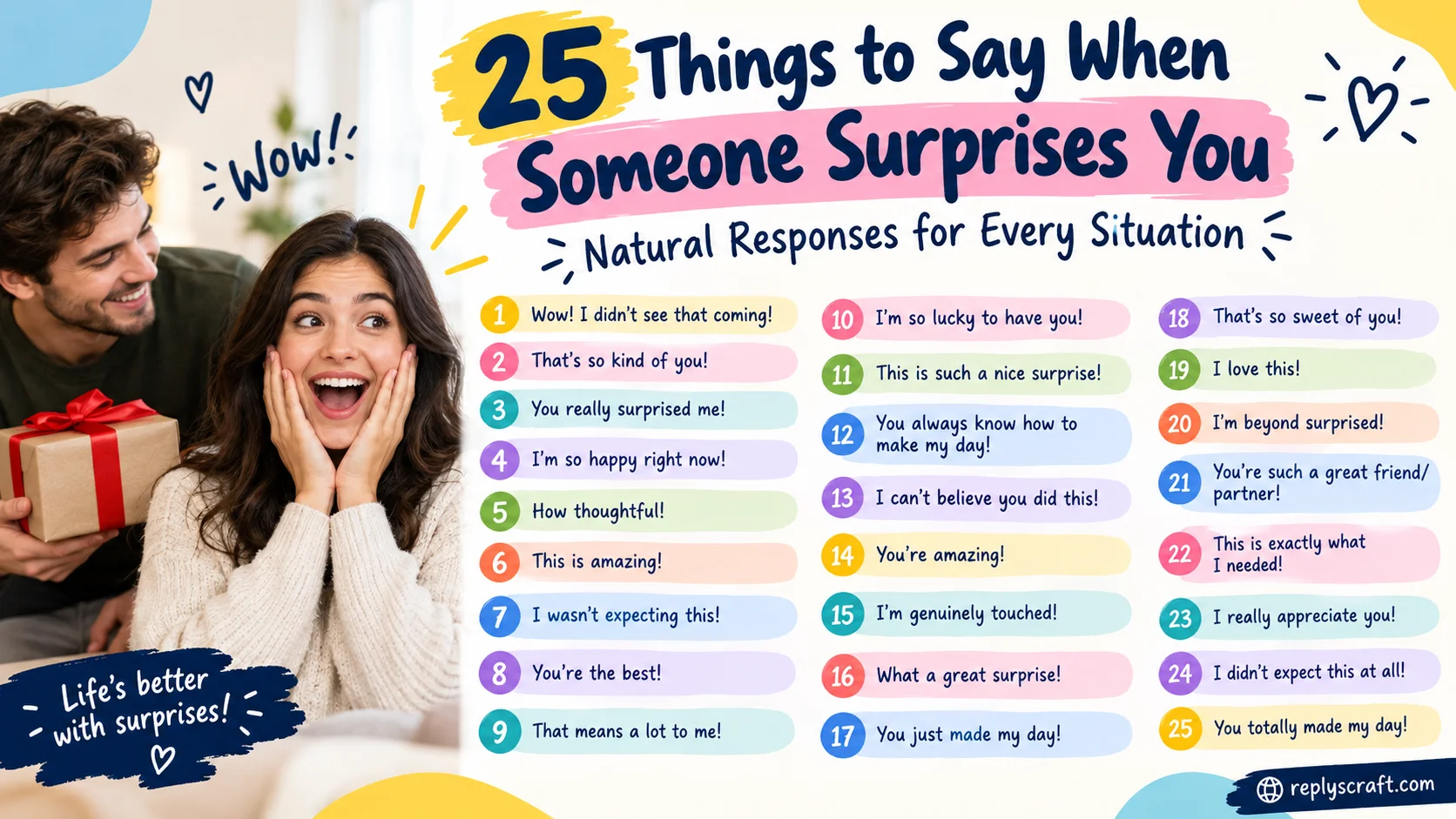

Getting surprised can leave you smiling, speechless, or scrambling for the right words. Whether a friend suddenly shows up, someone gives you an unexpected gift, your partner plans something sweet, or a colleague catches you completely off guard, responses when someone surprises you depend heavily on the moment and your relationship with that person.
You do not need a dramatic speech. A simple, genuine reaction can often feel much warmer than a perfectly prepared line. The ideas below cover grateful, funny, emotional, playful, flirty, and professional responses, along with examples showing how they sound in real conversations. Choose the one that matches your personality, the surprise, and the relationship rather than copying a response that feels unnatural.
1. “Wow, I Really Didn’t See That Coming!”
This is a natural choice when the surprise genuinely catches you off guard. It communicates genuine shock without making the moment overly emotional. It works especially well when someone has gone out of their way to keep their plans secret.
Meaning
You are telling the person that the surprise worked and that you genuinely had no idea it was coming.
Tone
Surprised, friendly, and sincere.
Example
Friend: We planned this whole thing for you!
You: Wow, I really didn’t see that coming! You actually got me.
Best Use
Use it with friends, family, coworkers, or anyone who has pleasantly surprised you.
2. “You Seriously Surprised Me!”
Sometimes a short reaction says everything. This response works when you are genuinely impressed by how successfully someone managed to surprise you.
Meaning
It shows that the person completely caught you off guard.
Tone
Excited and appreciative.
Example
Sister: I told everyone not to say anything.
You: You seriously surprised me! I had absolutely no clue.
Best Use
Great for birthday surprises, unexpected visits, gifts, and planned celebrations.
3. “This Is So Sweet of You.”
When the surprise is thoughtful rather than simply exciting, a warm response is more appropriate. This line focuses on the person’s effort and kindness.
Meaning
You appreciate not only the surprise but also the thought behind it.
Tone
Warm, grateful, and sincere.
Example
Friend: I remembered you said you wanted to try this restaurant.
You: This is so sweet of you. You actually remembered!
Best Use
Use it for thoughtful gifts, planned outings, small gestures, or unexpected acts of kindness.
4. “I’m Honestly Speechless.”
Some surprises are so unexpected that you genuinely do not know what to say. This response acknowledges that feeling without requiring you to invent a long reaction.
Meaning
The surprise affected you enough that words are difficult to find.
Tone
Emotional, appreciative, and genuine.
Example
Partner: I booked the trip you’ve been talking about.
You: I’m honestly speechless. I really wasn’t expecting this.
Best Use
Best for meaningful gifts, major surprises, romantic gestures, and emotional moments.
5. “How Did You Even Manage to Keep This a Secret?”
This adds curiosity to your reaction and invites the other person to tell you how they organized everything.
Meaning
You are impressed that they managed to surprise you without giving anything away.
Tone
Playful and curious.
Example
Friend: Surprise!
You: How did you even manage to keep this a secret? I usually notice everything!
Best Use
Perfect for close friends, family members, surprise parties, and elaborate plans.
6. “Okay, You Got Me!”
If you want something short and casual, this is hard to beat. It admits that the other person successfully caught you by surprise.
Meaning
You are playfully acknowledging that they outsmarted you.
Tone
Casual, funny, and friendly.
Example
Friend: I knew you’d never guess.
You: Okay, you got me! I had no idea.
Best Use
Use it with friends, siblings, cousins, and people you have a relaxed relationship with.
7. “I Needed This More Than You Know.”
Some surprises arrive at exactly the right moment. If someone does something kind when you have had a difficult or exhausting day, this response makes the emotional value clear.
Meaning
The surprise meant more to you because of what you were experiencing at the time.
Tone
Heartfelt and appreciative.
Example
Friend: I brought your favorite food. You looked like you needed a break.
You: I needed this more than you know. Thank you.
Best Use
Use it for supportive gestures from close friends, family, or a partner.
8. “You Really Know How to Make Someone Smile.”
This response focuses on the positive effect the surprise had on you. It is warm without sounding overly dramatic.
Meaning
You are telling the person that their gesture genuinely made you happy.
Tone
Friendly, grateful, and cheerful.
Example
Friend: I brought you the book you couldn’t find anywhere.
You: You really know how to make someone smile. Thank you!
Best Use
Good for thoughtful gifts, unexpected treats, and small acts of kindness.
9. “Wait… Is This Actually Happening?”
When the surprise feels almost unbelievable, a slightly dramatic reaction can make the moment more fun.
Meaning
You are expressing genuine disbelief in a playful way.
Tone
Excited and humorous.
Example
Partner: Pack your bag. We’re leaving tomorrow.
You: Wait… is this actually happening?
Best Use
Works particularly well for major surprises, trips, events, and unexpected plans.
10. “You’re Full of Surprises!”
This is an easy response when someone has surprised you more than once or has a naturally unpredictable personality.
Meaning
You are playfully pointing out that the person keeps catching you off guard.
Tone
Playful, light, and affectionate.
Example
Friend: I also got tickets for the show.
You: You’re full of surprises today!
Best Use
Use it with friends, partners, siblings, or other people you know well.
11. “I Can’t Believe You Did This for Me.”
When someone has made a significant effort, mentioning their effort directly can make your appreciation feel more personal.
Meaning
You are genuinely touched by what the person did.
Tone
Emotional and grateful.
Example
Friend: We decorated the whole room before you arrived.
You: I can’t believe you did this for me. This is amazing.
Best Use
Suitable for meaningful surprises, celebrations, thoughtful gifts, and major gestures.
12. “That Was Such a Nice Surprise.”
Not every reaction needs to be dramatic. This simple response is useful when you want to sound genuinely appreciative while keeping the conversation relaxed.
Meaning
You enjoyed the unexpected gesture and appreciate the person for doing it.
Tone
Polite, warm, and natural.
Example
Coworker: I brought you coffee since I was stopping by anyway.
You: That was such a nice surprise. Thanks!
Best Use
Works in casual conversations, workplaces, family situations, and everyday interactions.
13. “You’re Going to Make Me Cry!”
Sometimes a surprise is so touching that humor helps express the emotion without becoming too serious.
Meaning
You are emotionally touched by the person’s gesture.
Tone
Playful, emotional, and affectionate.
Example
Friend: Everyone recorded messages for your birthday.
You: You’re going to make me cry! I wasn’t ready for this.
Best Use
Best for close relationships and genuinely emotional surprises.
14. “I Was Not Prepared for This!”
This is a fun option when the surprise is bigger than you expected. It works especially well when you want to acknowledge your shock in a humorous way.
Meaning
The surprise was completely outside your expectations.
Tone
Funny, surprised, and casual.
Example
Friends: We rented the place for your birthday.
You: I was not prepared for this! You guys went all out.
Best Use
Great for parties, group surprises, unexpected gifts, and fun social situations.
15. “You Guys Are Too Much!”
When several people surprise you together, this playful response can show that you appreciate their effort without sounding overly formal.
Meaning
You are jokingly saying that the group went above and beyond.
Tone
Funny, affectionate, and appreciative.
Example
Friends: We all took the day off to celebrate with you.
You: You guys are too much! I honestly didn’t expect this.
Best Use
Use it with close friends, siblings, cousins, or a familiar group.
16. “How Am I Supposed to Top This?”
If someone gives you an especially thoughtful surprise, you can turn your appreciation into a playful joke.
Meaning
You are saying that their gesture was so good that matching it will be difficult.
Tone
Playful and appreciative.
Example
Partner: I planned your entire birthday weekend.
You: How am I supposed to top this?
Best Use
Particularly suitable for partners, close friends, or playful relationships.
17. “You’re Seriously Making Me Feel Special.”
A surprise can sometimes make someone feel valued rather than merely entertained. This response acknowledges that emotional side.
Meaning
You appreciate the personal attention and effort behind the surprise.
Tone
Warm, sincere, and affectionate.
Example
Friend: We remembered all your favorite things.
You: You’re seriously making me feel special. Thank you so much.
Best Use
Use it when the surprise feels personal and carefully planned.
18. “I Knew Something Was Going On… Just Not This!”
This is a good choice if you had a suspicion that something was happening but still did not guess the actual surprise.
Meaning
You suspected something unusual but were still surprised by the final reveal.
Tone
Funny and conversational.
Example
Friend: Surprise!
You: I knew something was going on… just not this!
Best Use
Perfect for surprise parties, secret plans, and situations where people were acting suspiciously.
19. “You’re Really Good at This Surprise Thing.”
When someone repeatedly manages to catch you off guard, turn it into a compliment.
Meaning
You are acknowledging their ability to plan and execute surprises successfully.
Tone
Playful and complimentary.
Example
Friend: I even changed the restaurant reservation without you knowing.
You: You’re really good at this surprise thing.
Best Use
Works well with friends, partners, and family members who enjoy planning surprises.
20. “Thank You. I Really Appreciate the Thought.”
Sometimes the most appropriate response is simple gratitude. This is especially useful when you want to recognize the person’s effort rather than focus on your reaction.
Meaning
You genuinely appreciate the thought and effort behind the surprise.
Tone
Polite, sincere, and respectful.
Example
Colleague: We got you a small gift for helping with the project.
You: Thank you. I really appreciate the thought.
Best Use
Ideal for coworkers, professional settings, acquaintances, and situations where a casual joke might not fit.
21. “You’re Making It Very Hard to Act Normal Right Now.”
For a romantic or playful situation, you can make your surprise sound a little flirtier without becoming overly direct.
Meaning
You are saying that the person’s gesture has affected you in a charming or romantic way.
Tone
Flirty, playful, and affectionate.
Example
Date: I remembered your favorite dessert.
You: You’re making it very hard to act normal right now.
Best Use
Best for dating or established romantic relationships where playful flirting is already comfortable.
22. “Okay, That Was Actually Really Cute.”
This works particularly well when the surprise is small, personal, and adorable rather than expensive or elaborate.
Meaning
You found the person’s gesture genuinely charming.
Tone
Casual, affectionate, and playful.
Example
Partner: I left your favorite snack in your bag.
You: Okay, that was actually really cute.
Best Use
Use it with a partner, date, close friend, or someone with whom you already share a relaxed connection.
23. “I Don’t Even Know What to Say, but Thank You.”
If you are genuinely overwhelmed, you do not have to force an impressive reaction. This response is honest and often more meaningful.
Meaning
You are admitting that the surprise caught you emotionally while still clearly expressing gratitude.
Tone
Sincere, humble, and heartfelt.
Example
Family: We all came to visit because we knew you were having a rough week.
You: I don’t even know what to say, but thank you. Seriously.
Best Use
Best for meaningful personal surprises and emotional moments.
24. “Well, You Definitely Won That Round.”
For a playful relationship where surprises feel like a friendly competition, this response keeps things light.
Meaning
You are joking that the other person successfully outdid you.
Tone
Competitive, humorous, and playful.
Example
Friend: I remembered your birthday before you remembered mine.
You: Well, you definitely won that round.
Best Use
Great for friends, siblings, couples, or anyone who enjoys friendly teasing.
25. “I’m Going to Remember This.”
Some surprises become memorable because of the thought behind them. This response communicates that the moment genuinely mattered to you.
Meaning
You are telling the person that their gesture created a meaningful memory.
Tone
Sincere, warm, and appreciative.
Example
Friend: We recreated the place where we all met years ago.
You: I’m going to remember this. Thank you for doing it.
Best Use
Ideal for meaningful celebrations, reunions, thoughtful gestures, and emotional surprises.
How to Choose the Right Thing to Say When Someone Surprises You
The best response is not necessarily the funniest or most emotional one. Match your words to the relationship and the size of the surprise. A simple “That was such a nice surprise” may be perfect for a coworker, while “I’m honestly speechless” may fit a deeply personal gesture from someone close to you.
Think about three things before responding:
- Who surprised you? Your friend, partner, family member, coworker, or someone you barely know?
- What did they do? A small gift requires a different reaction from a major surprise party.
- What are you genuinely feeling? Shock, happiness, gratitude, amusement, embarrassment, or even uncertainty?
Your natural reaction is usually more convincing than a line that sounds borrowed.
When a Funny Response Works Better
Humor can make a surprise even more enjoyable when you already have a comfortable relationship with the person. Lines such as “Okay, you got me!” or “I was not prepared for this!” keep the moment light.
However, avoid joking when the surprise is deeply emotional or when you are unsure how much effort the person put into it. A joke that works with your best friend may sound dismissive if someone has planned a meaningful gesture for you.
When to Give a More Emotional Response
A heartfelt response is appropriate when someone has invested significant time, effort, or personal thought into surprising you. You do not need to exaggerate your emotions. Simple honesty often works better.
For example, saying “I really appreciate the thought behind this” can communicate more than a dramatic reaction if you genuinely mean it.
Short Things to Say When Someone Surprises You Over Text
Not every surprise happens face-to-face. If someone sends you an unexpected gift, message, photo, announcement, or invitation, your response can be short.
Try:
- “Wait, seriously?!”
- “You actually surprised me!”
- “I did not see that coming.”
- “This is so sweet of you.”
- “Okay, you got me 😂”
- “That was completely unexpected!”
- “You just made my day.”
- “I’m genuinely surprised. Thank you!”
For texting, punctuation and emojis can help communicate emotion, but do not rely on them to replace genuine appreciation.
What to Say When a Friend Surprises You
With friends, you usually have more freedom to be casual and humorous. You can tease them, show genuine excitement, or simply tell them how much the gesture means to you.
A good friend-to-friend response might be:
“I honestly had no idea you were planning this. You got me good!”
If the surprise was particularly thoughtful, add something personal:
“Seriously, thank you. You remembered exactly what I like.”
That combination feels more genuine than simply saying “Thanks.”
What to Say When Your Partner Surprises You
Romantic surprises often carry an emotional or affectionate element. Instead of focusing only on the surprise itself, acknowledge the thought behind it.
You might say:
“You really know how to make me feel special. I wasn’t expecting this at all.”
For a more playful moment:
“Okay, you’re making it very difficult for me not to fall for you all over again.”
Use flirty language only when it naturally fits the relationship.
What to Say When a Family Member Surprises You
Family surprises can range from funny to deeply emotional. A warm response usually works better than an overly polished one.
You could say:
“I can’t believe you all planned this without me finding out. Thank you. This really means a lot.”
If the surprise is lighthearted, you can be more playful:
“You all are terrible at keeping secrets… except apparently this one!”
What to Say When a Coworker Surprises You
Professional situations require a little more restraint. Even if you are excited, avoid sarcasm or overly personal language unless you have a genuinely informal workplace relationship.
A simple response works well:
“Thank you so much. I really appreciate the thought and effort.”
If colleagues organize a celebration, you can say:
“I genuinely didn’t expect this. Thank you, everyone. That was very thoughtful.”
The goal is to show appreciation without making the situation uncomfortable.
What If You Don’t Like the Surprise?
Not every surprise is automatically pleasant. Sometimes someone surprises you with something you dislike, puts you in an uncomfortable situation, or crosses a personal boundary.
You do not have to pretend to be thrilled.
A respectful response might be:
“I appreciate that you thought of me, but I wasn’t expecting something like this.”
If you need to establish a clearer boundary:
“I know you meant well, but I’d prefer if you checked with me before making plans like this next time.”
You can appreciate someone’s intention without pretending that you enjoyed the outcome.
What If You’re Too Shocked to Respond?
You do not have to immediately produce the perfect sentence. A genuine pause is normal.
Start with something simple:
“Wow… give me a second. I genuinely wasn’t expecting this.”
Once the initial shock passes, explain what you appreciate about the gesture. This is often more natural than forcing a polished reaction immediately.
FAQs:
What is the best thing to say when someone surprises you?
The best response depends on the situation. A simple “I really didn’t see that coming!” works for many friendly surprises, while “I really appreciate the thought behind this” is better for a thoughtful or professional gesture.
How can I give a polite response to a surprise?
Focus on appreciation rather than exaggeration. You can say, “That was really thoughtful of you. Thank you.” This works particularly well when you do not know the person very closely.
What is a funny response when someone surprises you?
Try something like “Okay, you got me!” or “I was not prepared for this!” These responses are lighthearted without being unnecessarily sarcastic.
What should I say if a romantic partner surprises me?
Let your genuine feelings guide the response. Something such as “You really know how to make me feel special” works for a heartfelt moment, while a playful line can work if flirting is natural in your relationship.
Should I keep my response short?
Not necessarily. A short response is often perfect for a casual surprise, while a more meaningful gesture may deserve a few sincere sentences. Match the length of your response to the significance of the moment.
Conclusion:
The right words after a surprise do not have to be complicated. Sometimes “Wow, I really didn’t see that coming!” is enough. Other moments deserve something more personal, such as “I really appreciate the thought behind this.” The key is to respond to the actual moment, rather than searching for a line that sounds impressive.
Think about who surprised you, what they did, and how you genuinely feel. A funny response can keep a casual moment lively, while a sincere thank-you can make a meaningful surprise feel even more special. When in doubt, be honest, appreciative, and natural—your real reaction will usually sound better than a rehearsed one.



