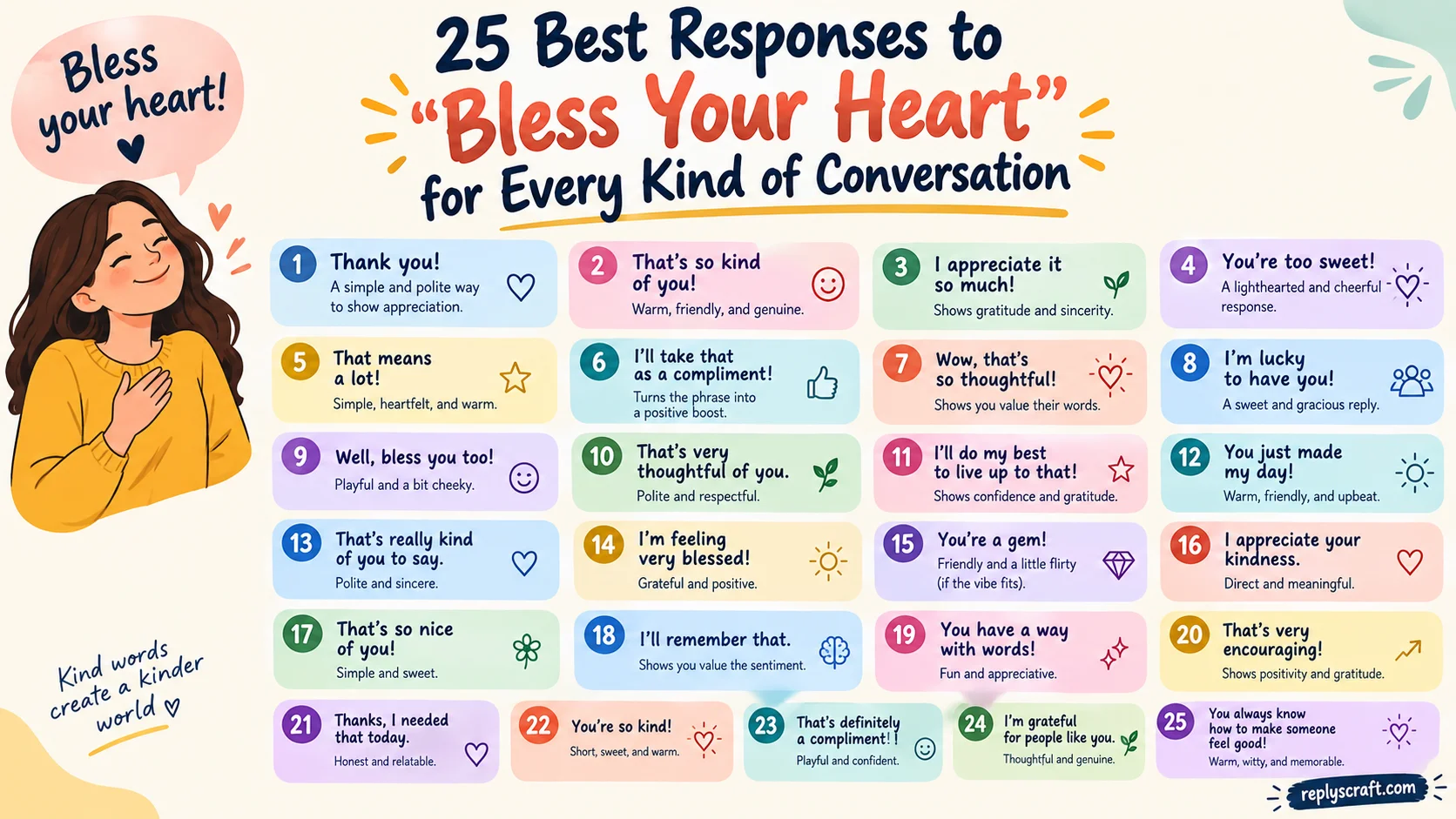

When somebody says bless your heart, you might be standing there, wondering whether you were complimented or quietly insulted. The English language has plenty of tricky phrases, but this one can be especially confusing in the American South. The words may sound warm, yet the delivery, tone, intent, and context can change everything. A Southern aunt might use it after a questionable decision, while a coworker could say it after something obvious.
A friend may drop it into a group chat as a compliment, joke, or perfect comeback. In everyday conversations, the best answer often depends on the person, relationship, genuine kindness, and level of sarcasm. If someone has roasted you while smiling politely, you don’t always need the harshest comeback. Matching the energy in the room can keep the moment from becoming uncomfortable. Best Responses to “Bless Your Heart” work best when they match the speaker’s tone and your relationship.
In 2026, social media, memes, and everyday conversations made clever comebacks feel like a form of art, but the basic rule is simple: pay attention to who says it and how they say it. Bless your heart can sound sweet, shady, or hilarious, depending on the phrase, meanings, and contexts around it. Someone may use it sarcastically, sympathetically, or with attitude, so a witty reply can prevent an awkward moment. The right response can flip the entire vibe without becoming savage.
You can stay playful, classy, and use wit while respecting Southern culture, American culture, and the Southern expression. You might simply say, Thank you, give a sincere answer, offer a playful comeback, or respond confidently, depending on the situation. Even if the speaker sounds patronizing, you can avoid an argument and maintain politeness. With 25 natural responses, an organized set of clever replies helps you choose something that fits the moment, whether a Southern American speaker is genuinely kind, caring, or showing subtle criticism.
1. “Thank You!” — The Simple Polite Response
Sometimes there is no reason to overthink it. If someone says “Bless your heart” sincerely, a straightforward thank-you keeps the interaction warm and comfortable. This is especially useful when the person is expressing sympathy, kindness, or encouragement rather than making a sarcastic remark.
Meaning
You are accepting their kindness without reading too much into the phrase.
Tone
Polite, friendly, warm
Example
Friend: You’ve had such a difficult week. Bless your heart.
You: Thank you. I really appreciate that.
Best Use
Use this with friends, relatives, coworkers, or anyone whose comment clearly sounds genuine.
2. “Bless Yours Too!”
This response mirrors the original phrase and keeps the exchange light. It works particularly well when you want to be friendly without getting into a long conversation.
Meaning
You are returning the kindness in a cheerful way.
Tone
Friendly, playful, polite
Example
Friend: You look exhausted. Bless your heart.
You: Bless yours too! It’s been a long week.
Best Use
Best for casual conversations where the speaker appears sincere or good-natured.
3. “I’ll Take That as a Compliment.”
If you are unsure whether “bless your heart” was meant sincerely or sarcastically, this response gives you a graceful way out.
Meaning
You are choosing to interpret their words positively instead of arguing about their intention.
Tone
Confident, clever, lighthearted
Example
Coworker: You really tried to fix that yourself? Bless your heart.
You: I’ll take that as a compliment.
Best Use
Great when someone may be teasing you but you don’t want to become defensive.
4. “I’m Doing Just Fine, Thanks.”
A calm response can work better than a clever comeback when “bless your heart” feels slightly condescending.
Meaning
You are quietly making it clear that you don’t need their pity.
Tone
Confident, direct, composed
Example
Person: You actually thought that plan would work? Bless your heart.
You: I’m doing just fine, thanks.
Best Use
Useful when someone is talking down to you and you want to maintain your composure.
5. “That’s Sweet of You.”
This is a safe response when you don’t want to guess whether the person is being sincere or sarcastic.
Meaning
You acknowledge the comment without giving the speaker an opportunity to turn it into an argument.
Tone
Polite, warm, diplomatic
Example
Neighbor: You’ve been working so hard lately. Bless your heart.
You: That’s sweet of you. Thank you.
Best Use
Ideal for acquaintances, family gatherings, and situations where keeping things pleasant matters.
6. “I Appreciate the Blessing.”
Give the phrase a playful twist with this slightly witty answer. It acknowledges the words while adding personality.
Meaning
You are accepting the “blessing” with a little humor.
Tone
Playful, witty, confident
Example
Friend: You’re really going through with this haircut? Bless your heart.
You: I appreciate the blessing. I’m committed now.
Best Use
Best among friends or people who enjoy playful banter.
7. “I’ll Survive Somehow.”
This works nicely when someone says “bless your heart” because they feel sorry for you.
Meaning
You are acknowledging the difficulty while showing that you can handle it.
Tone
Lighthearted, confident, humorous
Example
Friend: You have three deadlines tomorrow? Bless your heart.
You: I’ll survive somehow.
Best Use
Great for texting friends or joking about stressful situations.
8. “Well, I’m Glad Someone’s Praying for Me.”
Turn the phrase into a playful joke when you know the other person won’t take your response seriously.
Meaning
You are deliberately taking the phrase literally for comic effect.
Tone
Funny, playful, cheeky
Example
Friend: You’re going to finish all that food? Bless your heart.
You: Well, I’m glad someone’s praying for me.
Best Use
Best with close friends and casual conversations.
9. “Careful, That Sounds Like Shade.”
When you suspect “bless your heart” wasn’t entirely innocent, you can call it out without becoming aggressive.
Meaning
You are letting the person know that you noticed the possible sarcasm.
Tone
Confident, teasing, direct
Example
Friend: You wore that outfit? Bless your heart.
You: Careful, that sounds like shade.
Best Use
Good for friends who regularly tease you and understand playful confrontation.
10. “Was That a Compliment or a Warning?”
This is an excellent response when the meaning isn’t obvious.
Meaning
You are humorously asking the speaker to clarify their intention.
Tone
Clever, playful, curious
Example
Person: You decided to do it that way? Bless your heart.
You: Was that a compliment or a warning?
Best Use
Works well in casual conversations when you want to keep things humorous.
11. “I Know What That Tone Means.”
Sometimes the tone says more than the words. This response shows that you noticed.
Meaning
You are playfully suggesting that you understand the hidden message.
Tone
Confident, teasing, slightly sarcastic
Example
Friend: Bless your heart.
You: I know what that tone means.
Best Use
Best with people who know your sense of humor.
12. “You’re Not Fooling Me.”
This comeback works when the phrase is clearly being used sarcastically.
Meaning
You are showing that you recognize the person’s subtle jab.
Tone
Playful, confident, direct
Example
Friend: You thought that was a good idea? Bless your heart.
You: You’re not fooling me.
Best Use
Use it with people who are comfortable with teasing and banter.
13. “And I Bless Your Honesty.”
This is a clever way to turn possible sarcasm into a compliment.
Meaning
You are suggesting that their real opinion has finally come out.
Tone
Witty, confident, sarcastic
Example
Friend: That haircut is certainly… different. Bless your heart.
You: And I bless your honesty.
Best Use
Best for playful exchanges where both people understand the joke.
14. “Bless Your Heart Right Back.”
Sometimes matching someone’s energy is all you need.
Meaning
You are returning the phrase with a humorous edge.
Tone
Playful, cheeky, sarcastic
Example
Friend: You really bought that?
You: Bless your heart right back.
Best Use
Use this with friends or in informal online conversations. It can sound more sarcastic if delivered seriously.
15. “I’ll Keep That in Mind.”
A neutral response can be surprisingly effective when someone is being passive-aggressive.
Meaning
You acknowledge what they said without giving them an emotional reaction.
Tone
Calm, neutral, composed
Example
Coworker: You handled that meeting differently. Bless your heart.
You: I’ll keep that in mind.
Best Use
Useful when you want to remain professional and avoid unnecessary conflict.
16. “That’s One Way to Put It.”
This response is useful when you understand the hidden meaning but don’t want to argue about it.
Meaning
You are subtly acknowledging that their words may have another meaning.
Tone
Dry, clever, restrained
Example
Person: Your presentation was certainly memorable. Bless your heart.
You: That’s one way to put it.
Best Use
Works particularly well when you want a calm response instead of a sharp comeback.
17. “I’ll Choose to Hear the Nice Part.”
This response takes control of the conversation without escalating it.
Meaning
You are choosing positivity instead of responding to possible sarcasm.
Tone
Confident, mature, positive
Example
Person: You really think you can finish that today? Bless your heart.
You: I’ll choose to hear the nice part.
Best Use
Good when you want to keep your dignity and avoid unnecessary back-and-forth.
18. “That Almost Sounded Like an Insult.”
If you want to address the issue directly, this is clearer than using another sarcastic comeback.
Meaning
You are letting the speaker know that their comment didn’t feel entirely respectful.
Tone
Direct, confident, assertive
Example
Person: You tried cooking that yourself? Bless your heart.
You: That almost sounded like an insult.
Best Use
Use this when someone’s comments repeatedly cross the line from teasing into disrespect.
19. “I’m Not Sure How to Take That.”
This is one of the safest ways to respond when you’re genuinely uncertain about someone’s intention.
Meaning
You are asking them to clarify rather than assuming they meant something negative.
Tone
Calm, honest, neutral
Example
Person: Bless your heart.
You: I’m not sure how to take that.
Best Use
Useful when you’re talking to someone you don’t know well or when the tone is difficult to read.
20. “Should I Be Offended?”
A little humor can make an awkward moment much easier.
Meaning
You are jokingly asking whether the comment was meant as criticism.
Tone
Funny, playful, curious
Example
Friend: You really sent that message? Bless your heart.
You: Should I be offended?
Best Use
Best in relaxed conversations where a little teasing is already happening.
21. “I’ll Add It to My List of Compliments.”
This is a fun response when you suspect someone is disguising an insult as kindness.
Meaning
You are pretending to accept their words as praise.
Tone
Sarcastic, witty, playful
Example
Friend: You actually believe that outfit works? Bless your heart.
You: I’ll add it to my list of compliments.
Best Use
Great for close friends and playful texting.
22. “At Least You’re Keeping Me in Your Prayers.”
Take the religious wording literally and turn it into a light joke.
Meaning
You are responding to the “blessing” rather than the possible criticism behind it.
Tone
Funny, playful, light
Example
Friend: You have another crazy idea? Bless your heart.
You: At least you’re keeping me in your prayers.
Best Use
Works best when the original comment is clearly playful.
23. “I’ll Take the Blessing and Leave the Judgment.”
This response establishes a boundary while keeping the wording clever.
Meaning
You are willing to accept kindness but don’t want the judgment that may come with it.
Tone
Confident, clever, assertive
Example
Person: You decided to quit and start something completely different? Bless your heart.
You: I’ll take the blessing and leave the judgment.
Best Use
Useful when someone’s concern has crossed into unwanted criticism.
24. “Thanks. I’m Happy With My Choice.”
Sometimes the strongest response is simply confidence in yourself.
Meaning
You are making it clear that you don’t need approval for your decision.
Tone
Confident, mature, respectful
Example
Relative: You really decided to do that? Bless your heart.
You: Thanks. I’m happy with my choice.
Best Use
Especially appropriate for family, acquaintances, or situations involving personal decisions.
25. “Blessings Accepted.”
Short, memorable, and slightly cheeky, this response can end the conversation without creating tension.
Meaning
You are playfully accepting whatever the speaker intended.
Tone
Witty, casual, playful
Example
Friend: You’re going to try that again? Bless your heart.
You: Blessings accepted.
Best Use
Perfect for texting, social media comments, and casual conversations with people who understand your humor.
How to Choose the Right Response
The best response isn’t necessarily the funniest one. Context matters more than the cleverness of the comeback.
If the person sounds genuinely concerned, respond warmly with something like “Thank you” or “That’s sweet of you.” If you’re among close friends and the phrase is clearly teasing, a playful response such as “Was that a compliment or a warning?” can keep the exchange entertaining.
When the comment feels patronizing, you don’t have to fight sarcasm with sarcasm. A calm answer such as “I’m doing just fine, thanks” or “I’ll take the blessing and leave the judgment” can establish a boundary without creating unnecessary drama.
Quick tip: If you cannot tell whether “bless your heart” was sincere or sarcastic, start with a neutral response. You can always become more playful once you understand the person’s intention.
Responses to “Bless Your Heart” Over Text
Text messages make tone harder to read because there is no facial expression or voice to provide context. A sentence that sounds funny when spoken can look rude when typed.
For texting, shorter responses usually work best. “Thank you!” is safe, while “I’ll take that as a compliment” adds a little personality without being overly aggressive. If you’re joking with a close friend, “Should I be offended? 😂” makes the playful intention clearer.
Good Text Options
- “Thank you 😊”
- “Bless yours too!”
- “I’ll take that as a compliment 😂”
- “Was that shade? 😂”
- “Blessings accepted.”
- “I know what you mean 😂”
Choose based on your relationship rather than simply picking the most sarcastic option.
Funny Responses for Close Friends
Friends who regularly joke with each other can usually handle a more playful comeback. The key is mutual understanding. A joke works when both people recognize that you’re playing around.
Try something like “Well, I’m glad someone’s praying for me” or “At least you’re keeping me in your prayers.”
Avoid using a sharp comeback with a friend who is already upset. Humor can make tension worse when the other person isn’t in the mood to joke.
When “Bless Your Heart” Sounds Sarcastic
In some conversations, the phrase can be used as a polite-sounding way to express disbelief, criticism, or amusement. You may notice this from the person’s facial expression, timing, or the sentence that comes before it.
If you’re confident that the remark was sarcastic, you can respond playfully with:
- “I know what that tone means.”
- “Careful, that sounds like shade.”
- “I’ll take that as a compliment.”
- “And I bless your honesty.”
- “You’re not fooling me.”
Better choice: Match the level of sarcasm rather than immediately escalating it.
When You Should Keep Your Response Polite
Not every “bless your heart” deserves a comeback. If you’re speaking with an older relative, colleague, customer, manager, or someone you don’t know well, a neutral response is usually safer.
Try:
- “Thank you.”
- “I appreciate that.”
- “That’s kind of you.”
- “I’ll keep that in mind.”
- “I appreciate your concern.”
A polite response gives you room to understand the person’s intention before deciding whether a joke is appropriate.
When to Set a Boundary
If someone repeatedly uses “bless your heart” in a way that feels insulting, you don’t have to keep laughing it off. A direct but calm response can communicate that you’ve noticed the behavior.
For example, you could say, “I’m not sure what you mean by that,” or “That almost sounded like an insult.”
This approach is especially useful when the conversation involves personal choices, work, family matters, or sensitive subjects. Being confident doesn’t require being rude.
FAQs
What is the best response to “Bless Your Heart”?
The best response depends on the speaker’s intention. If they are being sincere, “Thank you” is usually ideal. If they’re teasing, “I’ll take that as a compliment” is a flexible and confident choice.
Is “Bless Your Heart” always an insult?
No. It can be completely sincere, particularly when someone is expressing sympathy, affection, or concern. In other contexts, it can be sarcastic or patronizing. Tone and context are important.
What is a funny response to “Bless Your Heart”?
Try “Was that a compliment or a warning?” or “Well, I’m glad someone’s praying for me.” These work best when the conversation is already playful.
How should I respond to “Bless Your Heart” over text?
Keep the response short and make the tone obvious. Something like “I’ll take that as a compliment 😂” can work well because the wording and emoji make the playful intention clearer.
What should I say if “Bless Your Heart” feels insulting?
You can respond calmly with “I’m not sure how to take that” or “That almost sounded like an insult.” This addresses the issue without automatically turning the exchange into an argument.
Conclusion
“Bless your heart” can carry warmth, sympathy, humor, or sarcasm depending on the situation. That’s why the best response isn’t always the cleverest comeback. Sometimes a simple “Thank you” is perfect; other times, a playful line such as “Was that a compliment or a warning?” fits the moment better.
Before replying, consider the speaker’s tone, your relationship with them, and whether the conversation is friendly or tense. When in doubt, start politely. You can always add humor later once you understand the intention.



