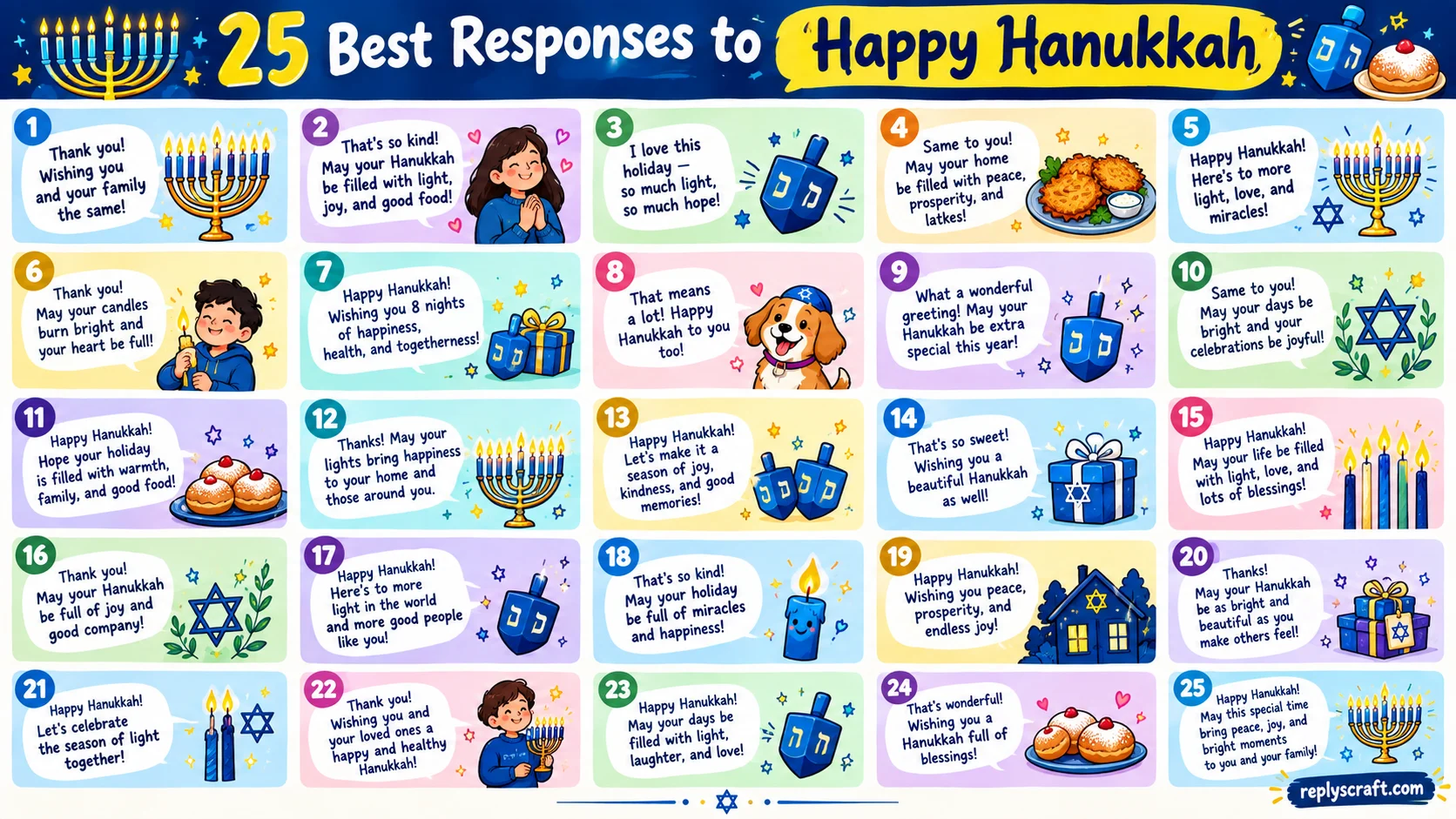

When someone says “Happy Hanukkah,” choosing the right Responses to Happy Hanukkah can feel difficult. You may smile, say thanks, or pause. A simple, warm, natural, and respectful reply can make the moment feel friendly without sounding forced or overly formal.
The best reply depends on your relationship and the situation. With a coworker, choose a polite and professional response. With a close friend, you can be more funny, witty, or playful. A thoughtful answer shows respect, kindness, and appreciation while keeping the conversation comfortable and genuine.
Whether you are responding at dinner, work, or through a social media comment, matching your tone makes communication easier. You can use creative, friendly, or casual responses depending on the setting. The goal is to sound human, cheerful, and confident while keeping the holiday greeting meaningful and pleasant for everyone.
1. “Thank You! Happy Hanukkah to You Too!”
This is the easiest and safest response when someone wishes you a happy Hanukkah. It acknowledges their greeting while returning the good wishes. You don’t need to make the conversation complicated, especially when the original message is brief.
Meaning
You appreciate their greeting and are returning the holiday wishes.
Tone
Friendly, polite, warm, and traditional.
Example
Friend: Happy Hanukkah!
You: Thank you! Happy Hanukkah to you too!
Best Use
Use this with friends, relatives, coworkers, neighbors, or anyone who has offered you a Hanukkah greeting.
2. “Thank You! Wishing You a Wonderful Hanukkah.”
If you want something slightly more thoughtful than a basic “you too,” this is a polished choice. It still feels natural and doesn’t sound overly formal.
Meaning
You’re expressing appreciation while wishing the other person a pleasant holiday.
Tone
Warm, respectful, and sincere.
Example
Coworker: Happy Hanukkah! Hope you have a great celebration.
You: Thank you! Wishing you a wonderful Hanukkah as well.
Best Use
This works particularly well in texts, cards, social media messages, and friendly workplace conversations.
3. “Thank You So Much! Hope Your Hanukkah Is Filled With Joy.”
A little extra warmth can make a holiday response feel more personal. This option focuses on happiness and good wishes rather than simply repeating the greeting.
Meaning
You’re showing genuine appreciation and wishing them happiness during the holiday.
Tone
Heartfelt, kind, and warm.
Example
Relative: Happy Hanukkah! Sending lots of love your way.
You: Thank you so much! Hope your Hanukkah is filled with joy too.
Best Use
Best for family members, close friends, and people who have sent you a particularly warm holiday message.
4. “Thank You! Hope You Have a Beautiful Celebration.”
Not every conversation needs a traditional holiday phrase. Sometimes a simple wish for a good celebration sounds more natural.
Meaning
You’re acknowledging their greeting and wishing them an enjoyable holiday.
Tone
Friendly, thoughtful, and relaxed.
Example
Neighbor: Happy Hanukkah!
You: Thank you! Hope you have a beautiful celebration.
Best Use
Good for neighbors, acquaintances, coworkers, and casual conversations.
5. “Happy Hanukkah! 🕎”
Sometimes the best response is simply to return the greeting. Adding a menorah emoji can make a short text feel a little more festive without adding unnecessary words.
Meaning
You’re warmly returning the holiday greeting.
Tone
Casual, cheerful, and friendly.
Example
Friend: Happy Hanukkah!
You: Happy Hanukkah! 🕎
Best Use
Ideal for texting, messaging apps, and social media.
6. “Thank You! Sending You Lots of Hanukkah Cheer.”
This response adds a cheerful, celebratory feeling without becoming overly sentimental.
Meaning
You appreciate the person’s wishes and are sending positive holiday energy back.
Tone
Cheerful, warm, and affectionate.
Example
Friend: Happy Hanukkah! Hope you’re celebrating with everyone.
You: Thank you! Sending you lots of Hanukkah cheer too.
Best Use
Great for friends and family, especially in holiday texts.
7. “Thank You! I Hope You Have a Joyful Hanukkah.”
A slightly more polished version can be useful when you want your response to sound sincere but still conversational.
Meaning
You’re returning their good wishes in a respectful way.
Tone
Polite, sincere, and warm.
Example
Acquaintance: Happy Hanukkah!
You: Thank you! I hope you have a joyful Hanukkah too.
Best Use
Suitable for acquaintances, community members, coworkers, and respectful social conversations.
8. “Thank You! May Your Hanukkah Be Full of Light and Happiness.”
Hanukkah is associated with light, so this response gives the greeting a more meaningful and heartfelt touch.
Meaning
You’re wishing the person happiness, warmth, and a positive holiday.
Tone
Heartfelt, thoughtful, and slightly poetic.
Example
Family Friend: Happy Hanukkah! Wishing you and your family the best.
You: Thank you! May your Hanukkah be full of light and happiness too.
Best Use
Good for cards, family messages, social posts, and heartfelt conversations.
9. “Thank You! Hope You Get Plenty of Latkes!”
If you’re talking with someone who enjoys holiday humor, you can make your reply playful by mentioning a familiar Hanukkah food.
Meaning
You’re returning the greeting while adding a lighthearted holiday joke.
Tone
Funny, playful, and casual.
Example
Friend: Happy Hanukkah!
You: Thank you! Hope you get plenty of latkes this year!
Best Use
Best with friends, siblings, or people who appreciate casual holiday humor.
Quick tip: Food-related jokes work best when you already have a friendly relationship. They may feel too casual in a formal setting.
10. “Thank You! May the Candles Shine Bright.”
For a more creative response, you can refer to the candles traditionally associated with Hanukkah.
Meaning
You’re offering a warm holiday wish using imagery connected with Hanukkah.
Tone
Warm, thoughtful, and slightly poetic.
Example
Friend: Happy Hanukkah!
You: Thank you! May the candles shine bright and bring you lots of happiness.
Best Use
Useful for greeting cards, social media captions, and thoughtful messages.
11. “Thanks! Hope You and Your Family Have a Wonderful Hanukkah.”
When someone includes you and your family in their holiday wishes, returning the sentiment to their family makes your response feel more personal.
Meaning
You’re extending your holiday wishes beyond the individual.
Tone
Warm, respectful, and family-oriented.
Example
Neighbor: Happy Hanukkah to you and your family!
You: Thanks! Hope you and your family have a wonderful Hanukkah too.
Best Use
Ideal for family friends, neighbors, coworkers, and community relationships.
12. “Thank You! That Means a Lot.”
Sometimes the person wishing you a happy Hanukkah is making a thoughtful effort to acknowledge your holiday. In that situation, you may want to recognize the gesture itself.
Meaning
You’re expressing appreciation for their kindness and thoughtfulness.
Tone
Sincere, personal, and appreciative.
Example
Friend: I wanted to make sure I wished you a Happy Hanukkah.
You: Thank you! That means a lot.
Best Use
Best when someone has made a particularly thoughtful gesture or remembered your holiday.
13. “Thanks! Hope You’re Enjoying the Holiday Season Too.”
This response works when you want to acknowledge their Hanukkah greeting without assuming that they celebrate Hanukkah themselves.
Meaning
You’re thanking them and extending a broader seasonal good wish.
Tone
Friendly, inclusive, and casual.
Example
Coworker: Happy Hanukkah!
You: Thanks! Hope you’re enjoying the holiday season too.
Best Use
Useful when you’re unsure whether the other person celebrates Hanukkah.
14. “Thank You! Wishing You Peace, Happiness, and Plenty of Good Memories.”
This is a good choice when the conversation is more meaningful than a quick text exchange.
Meaning
You’re offering sincere wishes for happiness and memorable moments.
Tone
Heartfelt, respectful, and thoughtful.
Example
Family friend: Happy Hanukkah! Wishing you a wonderful holiday with your loved ones.
You: Thank you! Wishing you peace, happiness, and plenty of good memories too.
Best Use
Works well in cards, family messages, and longer holiday conversations.
15. “Thanks! Let the Hanukkah Fun Begin!”
If you’re responding to a friend who likes energetic messages, you can keep things upbeat.
Meaning
You’re happily accepting the greeting and showing excitement about the celebration.
Tone
Playful, energetic, and cheerful.
Example
Friend: Happy Hanukkah! Ready to celebrate?
You: Thanks! Let the Hanukkah fun begin!
Best Use
Best for friends, group chats, parties, and casual messages.
16. “Thank You! I Hope This Hanukkah Brings You Lots of Happiness.”
A sincere wish doesn’t have to be complicated. This one is warm without sounding overly formal.
Meaning
You’re returning the holiday greeting with a personal wish for happiness.
Tone
Kind, sincere, and friendly.
Example
Friend: Happy Hanukkah!
You: Thank you! I hope this Hanukkah brings you lots of happiness too.
Best Use
Appropriate for friends, relatives, acquaintances, and personal messages.
17. “Thank You! Happy Hanukkah to You and Yours.”
This is a compact way to extend the greeting to the other person’s household or loved ones.
Meaning
You’re returning the holiday wishes to the person and those close to them.
Tone
Warm, respectful, and slightly traditional.
Example
Neighbor: Happy Hanukkah!
You: Thank you! Happy Hanukkah to you and yours as well.
Best Use
Good for neighbors, family friends, community messages, and greeting cards.
18. “Thanks! Wishing You Eight Nights of Happiness.”
This is a playful way to reference Hanukkah’s eight-night celebration without making the response too complicated.
Meaning
You’re giving the holiday greeting a cheerful and memorable twist.
Tone
Playful, upbeat, and friendly.
Example
Friend: Happy Hanukkah!
You: Thanks! Wishing you eight nights of happiness!
Best Use
Great for friends, texts, social media, and casual holiday conversations.
19. “Thank You! Hope You Have a Fun and Meaningful Hanukkah.”
Not every holiday is only about having fun. This response balances celebration with the personal meaning people may associate with the holiday.
Meaning
You’re wishing them both enjoyment and a meaningful celebration.
Tone
Warm, thoughtful, and sincere.
Example
Coworker: Happy Hanukkah! Hope you have a great one.
You: Thank you! Hope you have a fun and meaningful Hanukkah too.
Best Use
Works well with coworkers, friends, acquaintances, and community contacts.
20. “Thanks! I Appreciate the Hanukkah Wishes.”
If you’re unsure what else to say, there’s nothing wrong with keeping your response simple and gracious.
Meaning
You’re directly acknowledging their kindness.
Tone
Polite, neutral, and respectful.
Example
Acquaintance: Happy Hanukkah!
You: Thanks! I appreciate the Hanukkah wishes.
Best Use
Useful when you don’t know the person well or want to keep the exchange brief.
21. “Thank You! Hope Your Holiday Is Filled With Family, Food, and Laughter.”
This gives a casual holiday message a more personal and vivid feel.
Meaning
You’re wishing them a happy celebration surrounded by good company and enjoyable moments.
Tone
Friendly, warm, and conversational.
Example
Friend: Happy Hanukkah! What are your plans?
You: Thank you! Hope your holiday is filled with family, food, and laughter too.
Best Use
Best for friends and family rather than formal workplace messages.
22. “Thank You! Sending Warm Wishes Your Way.”
Sometimes you don’t need to mention Hanukkah again. A warm general holiday response can sound elegant and natural.
Meaning
You’re expressing appreciation and returning positive wishes.
Tone
Warm, polished, and respectful.
Example
Acquaintance: Happy Hanukkah!
You: Thank you! Sending warm wishes your way as well.
Best Use
Good for social media, cards, acquaintances, and professional relationships.
23. “Thanks! Same to You—Hope It’s a Special One.”
This sounds especially natural in casual conversation because it doesn’t feel scripted.
Meaning
You’re returning the greeting while wishing them a memorable celebration.
Tone
Casual, friendly, and sincere.
Example
Friend: Happy Hanukkah!
You: Thanks! Same to you—hope it’s a special one.
Best Use
Excellent for texting and everyday conversations.
24. “Thank You! I Hope You Have a Peaceful and Joyful Celebration.”
When you want your response to be respectful rather than humorous, this is a reliable choice.
Meaning
You’re expressing appreciation and wishing them a peaceful holiday.
Tone
Respectful, sincere, and calm.
Example
Coworker: Happy Hanukkah! Wishing you a wonderful celebration.
You: Thank you! I hope you have a peaceful and joyful celebration too.
Best Use
Especially appropriate for professional environments, acquaintances, and respectful conversations.
25. “Thank You! 🕎 Wishing You Love, Light, and Happiness.”
This is a warm closing message that feels more personal than a basic “you too.”
Meaning
You’re returning the holiday greeting with wishes for positive and meaningful experiences.
Tone
Heartfelt, warm, celebratory, and affectionate.
Example
Friend: Happy Hanukkah! Hope you’re having a beautiful celebration.
You: Thank you! 🕎 Wishing you love, light, and happiness too.
Best Use
Ideal for close friends, family, greeting cards, social media, and personal texts.
How to Choose the Right Response
The best response isn’t necessarily the longest or most clever one. Context matters more than creativity. A short “Thank you!” may be perfect for a coworker, while a close friend may appreciate a playful holiday joke.
Think about three things before replying:
- Who is speaking? A close friend, family member, coworker, or stranger may call for different levels of warmth.
- How did they say it? Match their energy. A short text usually doesn’t require a paragraph-long response.
- What relationship do you have? Humor and teasing are easier with people who already understand your personality.
When you’re uncertain, choose a warm but neutral response. It is usually better to sound sincere and simple than to force a joke that could be misunderstood.
Short Responses to Happy Hanukkah
If you’re replying by text and don’t want to write much, these are natural choices:
- “Thank you! Happy Hanukkah to you too!”
- “Thanks! Same to you!”
- “Happy Hanukkah! 🕎”
- “Thank you! Wishing you a wonderful Hanukkah.”
- “Thanks! Hope you have a great celebration.”
- “Thank you! Warm wishes to you too.”
- “Thanks! Hope you have a joyful holiday.”
A short response is completely appropriate when the original greeting is short. You don’t have to turn every holiday exchange into a long conversation.
FAQ:
What is a good response to “Happy Hanukkah”?
A simple “Thank you, Happy Hanukkah to you too!” is a warm, polite, and respectful response that works well in most situations.
Can I give a funny response to “Happy Hanukkah”?
Yes, a funny or witty response can work with close friends or people who enjoy humor. Keep it friendly and suitable for the conversation.
How should I respond to “Happy Hanukkah” from a coworker?
A professional and polite reply is usually appropriate. You can say, “Thank you! Wishing you a wonderful Hanukkah as well.”
What should I say to a friend who says “Happy Hanukkah”?
With a close friend, you can keep your response casual, warm, or playful. A personal reply can make the conversation feel more natural and genuine.
Is “Thank you, Happy Hanukkah to you too” appropriate?
Yes, it is a natural, respectful, and widely suitable response. It acknowledges the greeting and politely returns the holiday wishes.
Conclusion:
Responses to Happy Hanukkah can be simple, warm, and natural. The right reply depends on your relationship, setting, and desired tone, so choose words that feel genuine.
Whether you prefer a polite, funny, professional, or friendly response, showing kindness and appreciation keeps the conversation comfortable. A thoughtful greeting can create a positive moment and meaningful connection.



